10/27/09: The bird is much calmer than before. He took a bath in bird bath cage couple days ago. Still no singing or making any sound yet. Begins to eat Mazzuri pellets and parrots fruit sense pellets beside regular feed of mealworms daily.
After a week of keeping the bird, so far the bird is still nervous when I come near the cage. If I stand about few steps away, he will calm down. I give him mealworms, superworm, waxworm, cricket, cockroaches, earthworm, pellets, and grape fruit during this first week, but so far he only eat mealworms. I also allow him to access to bath cage every other day, but he did not take the bath. I heard from a person who has long experiences in bird keeping that mockingbird like apple, so I'll try to offer him apple this week to see if he will eat or not. Hopefully he will adjust to the new life soon.
Here is some of the songs of this bird recorded in its native land:
http://www.xeno-canto.org/sounds/uploaded/AEFZWKWLMO/Laqui158MimLon.mp3
http://www.xeno-canto.org/sounds/uploaded/XRABICUARW/003-044-Long-tailed-Mockingbird.mp3
http://www.xeno-canto.org/sounds/uploaded/IODAFNJGEM/Long%20tailed%20mockingbird%20el%20Tocto.mp3
Current Update News

Saturday, October 17, 2009


Sunday, October 11, 2009
Longtailed Mockingbird - Mimus Longicaudatus
Identifications:
A medium-sized songbird, a bit more slender than a thrush and with a longer tail. Mockingbirds have small heads, a long, thin bill with a hint of a downward curve, and long legs. Their wings are short, rounded, and broad, making the tail seem particularly long in flight.Mockingbirds are overall gray-brown, paler on the breast and belly, with two white wingbars on each wing. A white patch in each wing is often visible on perched birds, and in flight these become large white flashes. The white outer tail feathers are also flashy in flight. (from birdexpress.net)
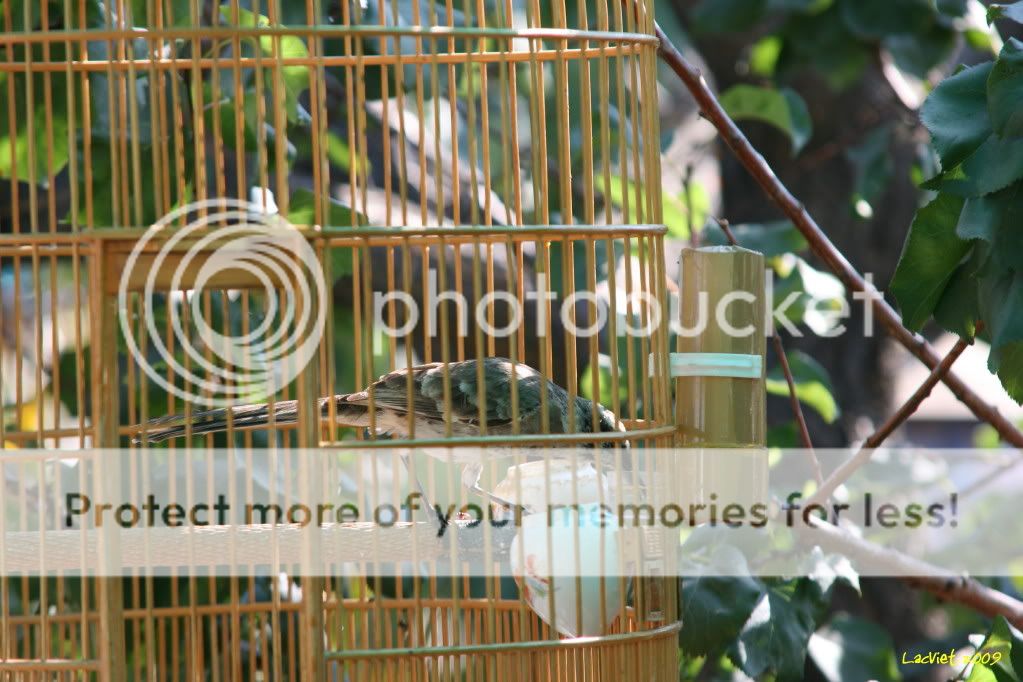
I accquire this bird on 10/10/09. I want the male and the shop tried to give me what I want but no guarantee as both male and female are looked alike. So far the bird is calm but little nervous when I stand infront of the cage. He jumps around the cage whenever I come near but not in a panic/blindly jumping to cause any harm to himself. He eat few crickets, and small mealworms as far as I see. Hopefully when he gets use to the cage and start eating pellets, he will sing which is the main objective why I accquire this longtailed mockingbird. My shama can learn new song from this bird.
![]()
![]()
![]()
A medium-sized songbird, a bit more slender than a thrush and with a longer tail. Mockingbirds have small heads, a long, thin bill with a hint of a downward curve, and long legs. Their wings are short, rounded, and broad, making the tail seem particularly long in flight.Mockingbirds are overall gray-brown, paler on the breast and belly, with two white wingbars on each wing. A white patch in each wing is often visible on perched birds, and in flight these become large white flashes. The white outer tail feathers are also flashy in flight. (from birdexpress.net)
I accquire this bird on 10/10/09. I want the male and the shop tried to give me what I want but no guarantee as both male and female are looked alike. So far the bird is calm but little nervous when I stand infront of the cage. He jumps around the cage whenever I come near but not in a panic/blindly jumping to cause any harm to himself. He eat few crickets, and small mealworms as far as I see. Hopefully when he gets use to the cage and start eating pellets, he will sing which is the main objective why I accquire this longtailed mockingbird. My shama can learn new song from this bird.


Friday, October 9, 2009
Main supplements for White-rumped Shama
This is the list of all the supplements that I use for Shama. The main supplement that everyone should have all the time (unless you can duplicate exactly what shama eating in the wild) is Vitamin B complex. In breeding season, Calcium is very important especially for the female. Not enough reserve calcium in the body to form egg can cause soft egg shell, egg binding, or death in the female. Multi-vitamine is another the supplement that need to keep the bird healthy. These are the big three supplements that everyone who keeps Shama should have at all time.
![]()
![]()
![]()


Thursday, October 8, 2009
Shama from Korea
One of the shama lover in Korea, Kihyung, send me the picture of his bird. According to him, keeping shama in Korea is very hard as there isn't much people keeing shama and commercial dry food is very hard to find.
Please click at the picture to see bigger image

Please click at the picture to see bigger image

Monday, September 28, 2009
Newly build aviary and some update pics of my collection
After 3 weeks of planning, buying, and building, the new aviary for the birds are almost complete. There is total of 7 small aviary (4ft deep x 2 ft wide x 6ft tall) all connect together and divided by a sheet of plywood. The goal is when breeding season come, all i need to do is take one of the divided plywood down and two small aviary become one 4x4x6 breeding aviary. I still need to finish the last mini aviary and clean up.

Close up one each mini aviary:

My H2N1 female: a mom of 14 babies this 09 season. She is starting to molt.

My H3N1 male: a father of 14 babies this 09 season. He is starting to molt.

My H5N1 male: He is born this year 2009 from one of my best friend DV & Andy. Currently is near the end of molting. Tail is about little over 7.5in


My H1N1 male: He is born last year 2008. I acquired him from my best friend Andy. First molt is 8in long tail from tip to end. He is curently on molt.

My H32N2 female: She is born this year 2009 from father H3N1 and mother H2N1


My H4N1 female: She is born this year 2009 also.


Cockroach egg sacks. Cockroach is another souce of food that I feed my bird. I try to raise them instead of buying.


Close up one each mini aviary:
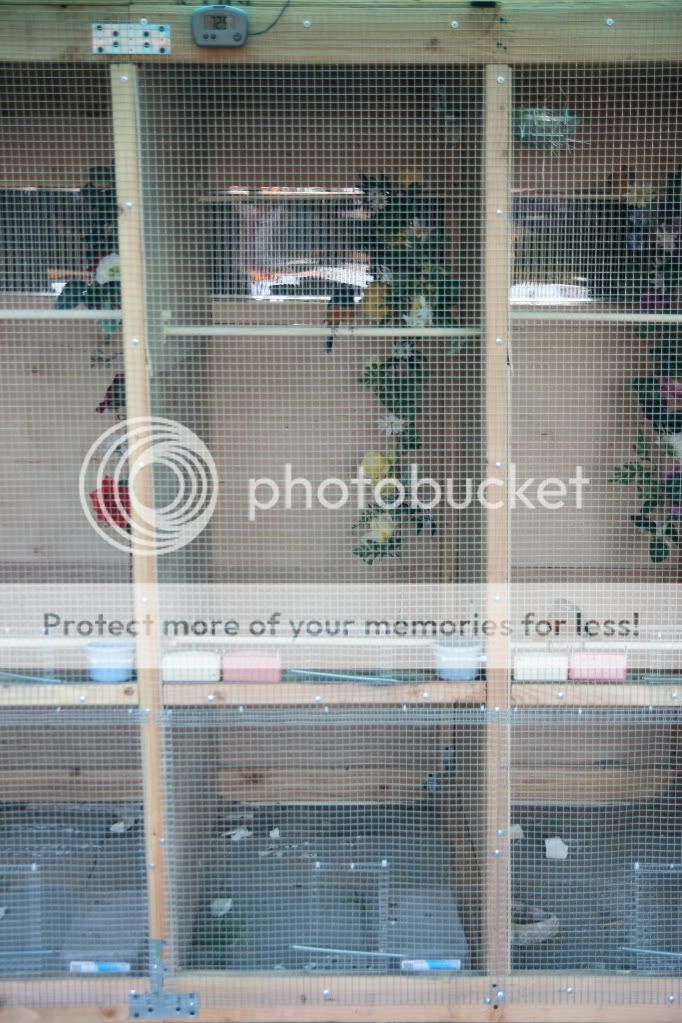
My H2N1 female: a mom of 14 babies this 09 season. She is starting to molt.

My H3N1 male: a father of 14 babies this 09 season. He is starting to molt.
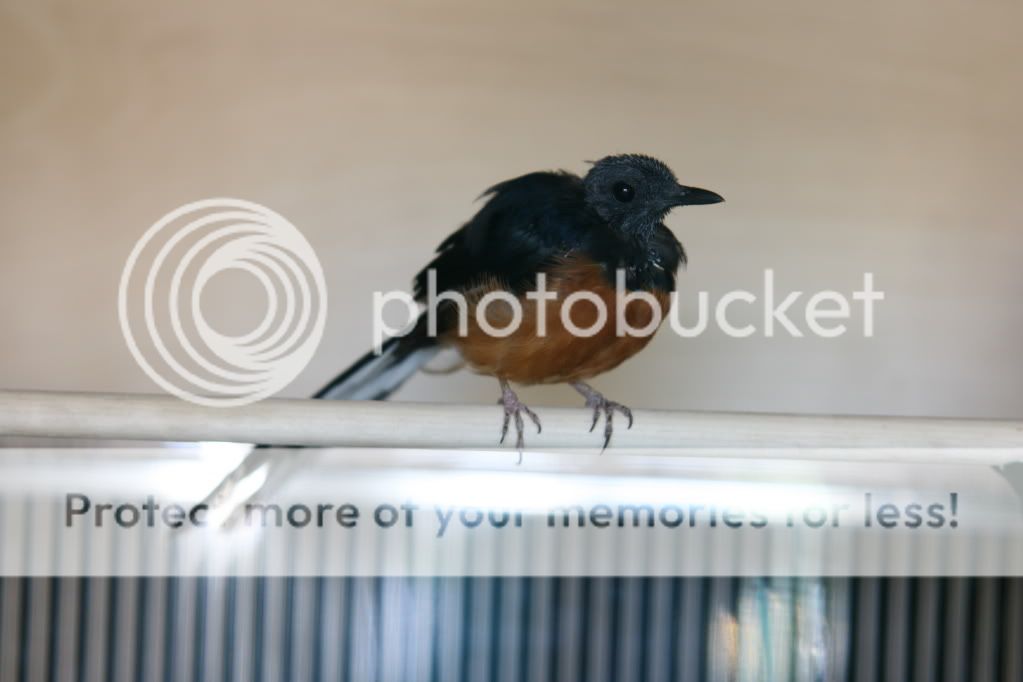
My H5N1 male: He is born this year 2009 from one of my best friend DV & Andy. Currently is near the end of molting. Tail is about little over 7.5in

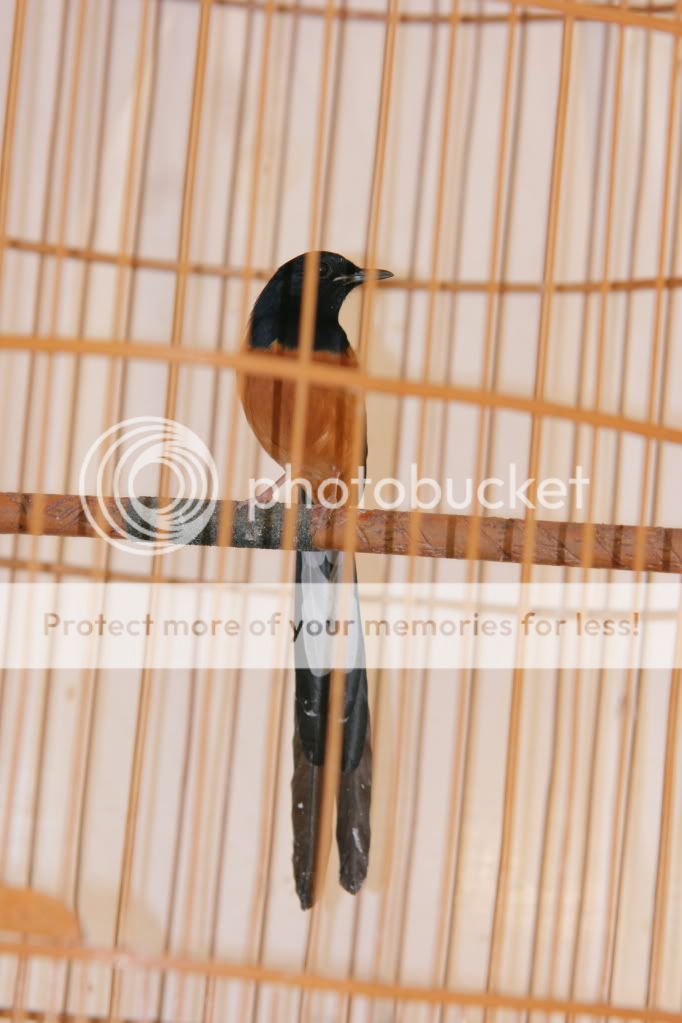
My H1N1 male: He is born last year 2008. I acquired him from my best friend Andy. First molt is 8in long tail from tip to end. He is curently on molt.

My H32N2 female: She is born this year 2009 from father H3N1 and mother H2N1
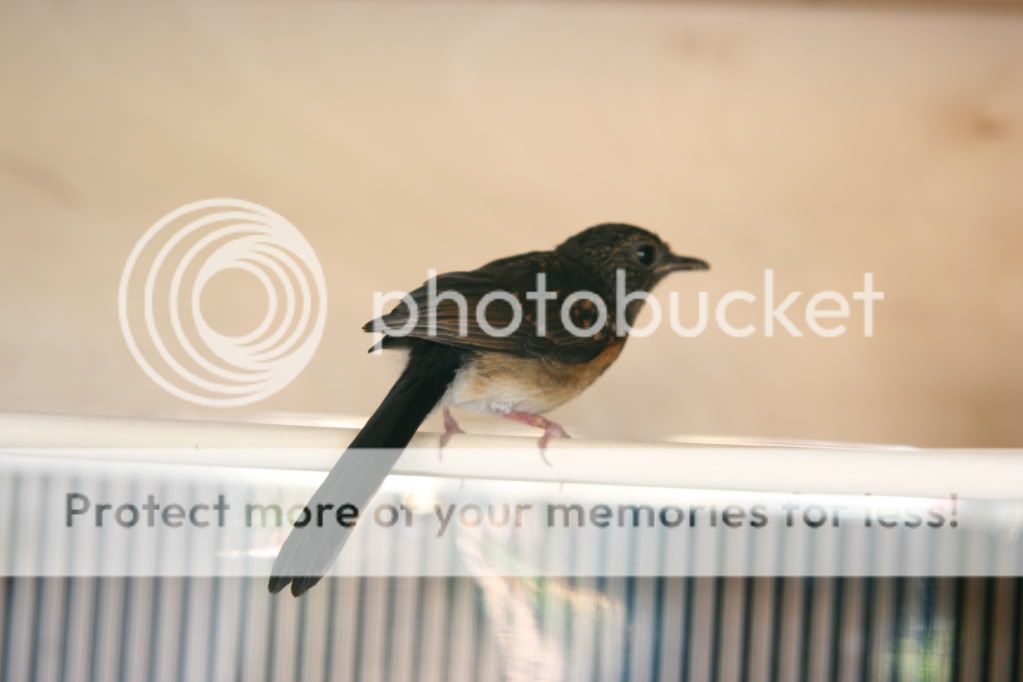
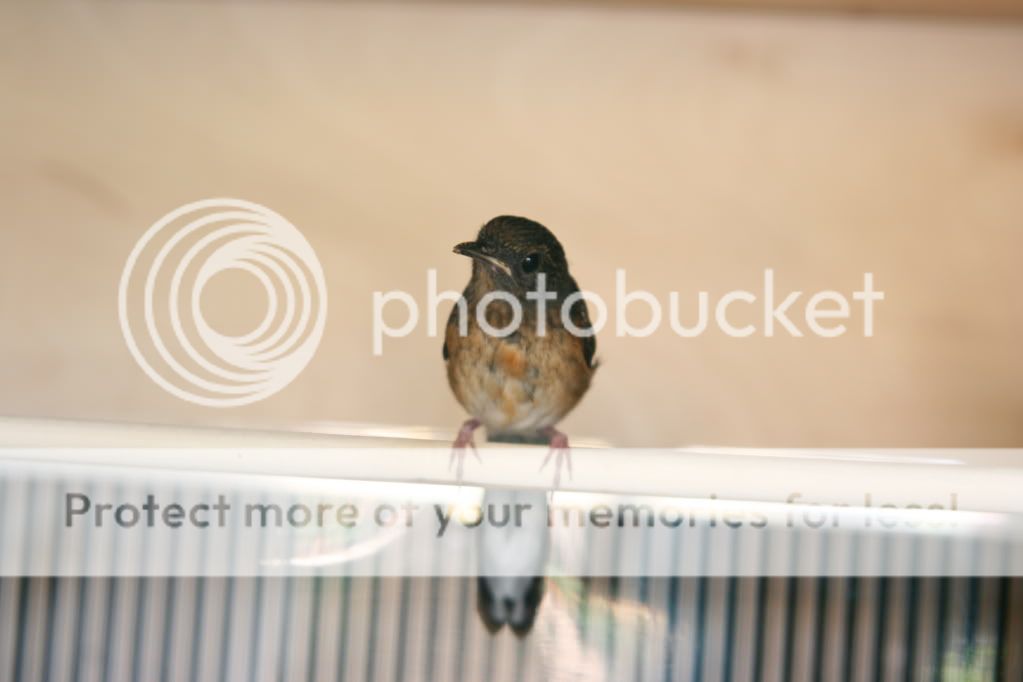
My H4N1 female: She is born this year 2009 also.

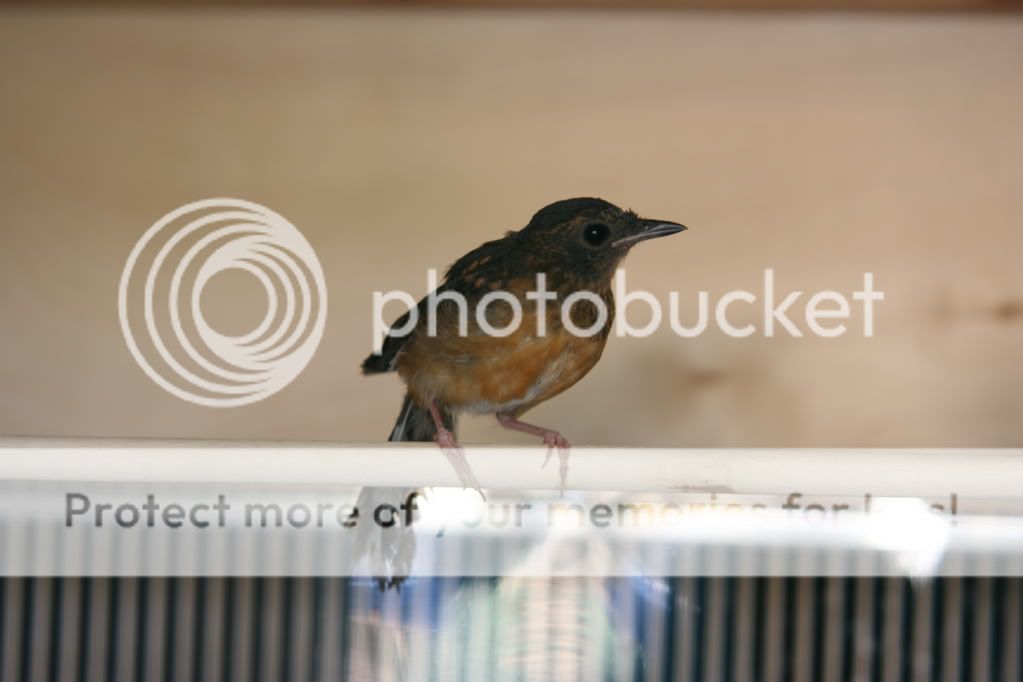
Cockroach egg sacks. Cockroach is another souce of food that I feed my bird. I try to raise them instead of buying.

Wednesday, September 16, 2009
Molting pics
Some pics of the bird that are currently molting
Baby female shama hatched on July 08

Baby male shama hatched on April (I think). This one is from one of my good friend and hopefully he will be my breeding stock for years to come.


The father of 14 babies is about to enter molting:

This is the first shama I have since the beginning of this year. Next year he will be 2 years old and will be my main breeding stock.


Here is a pair of Hwamei that I plan to breed next year:


Baby female shama hatched on July 08
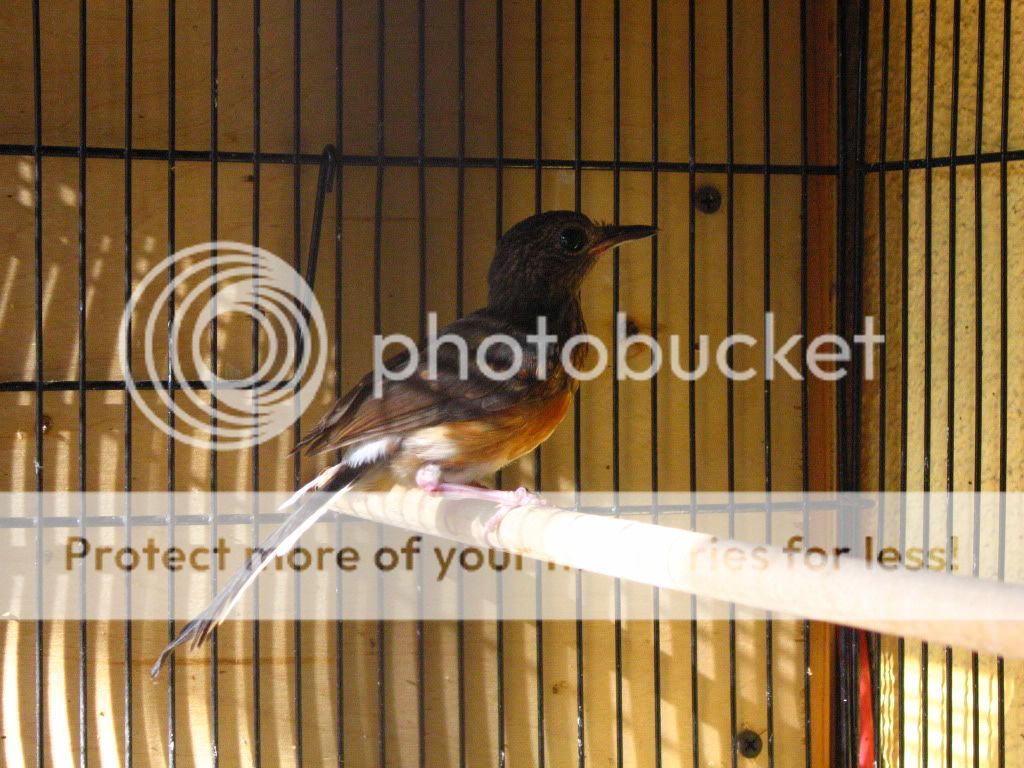
Baby male shama hatched on April (I think). This one is from one of my good friend and hopefully he will be my breeding stock for years to come.
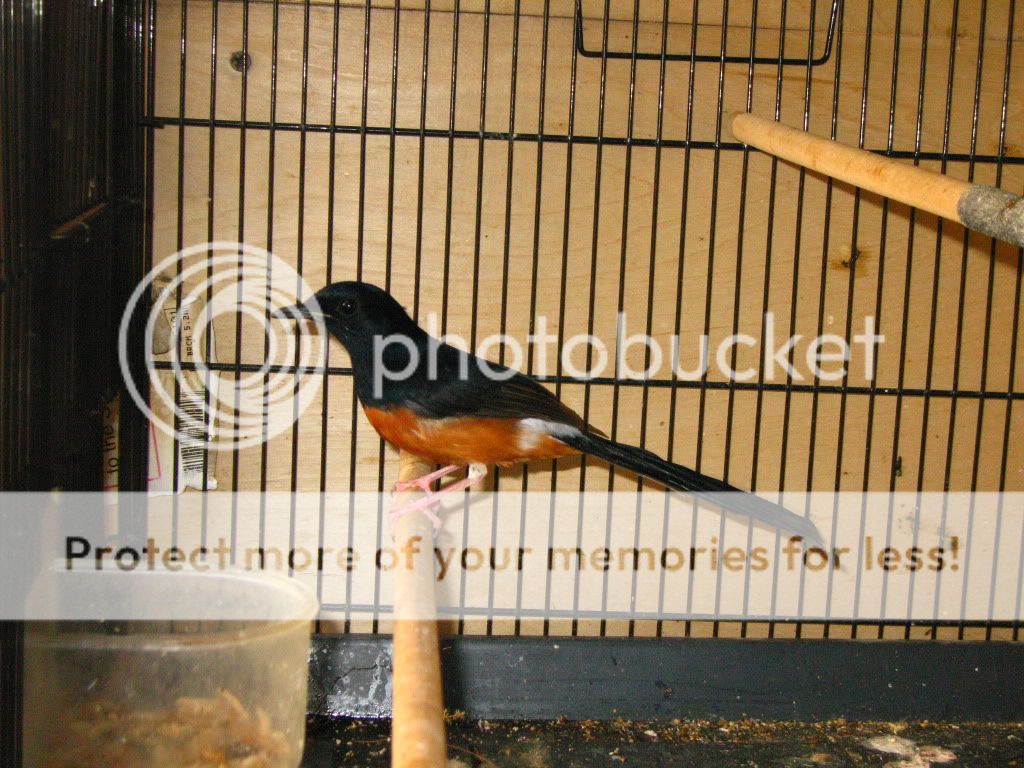
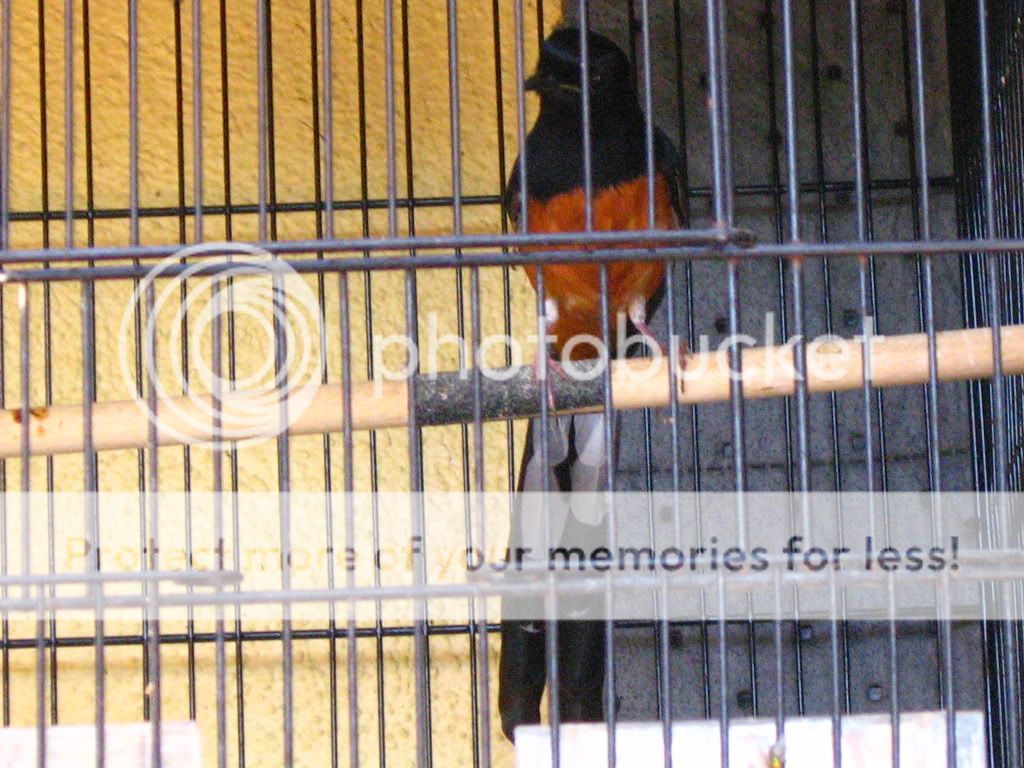

The father of 14 babies is about to enter molting:
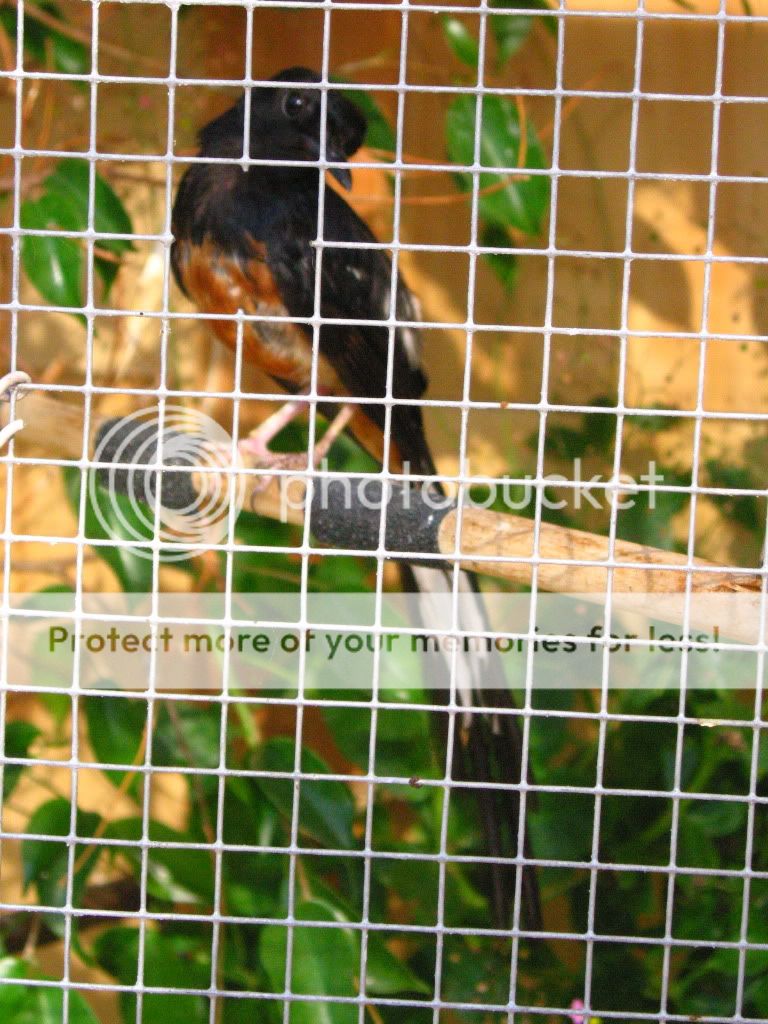
This is the first shama I have since the beginning of this year. Next year he will be 2 years old and will be my main breeding stock.


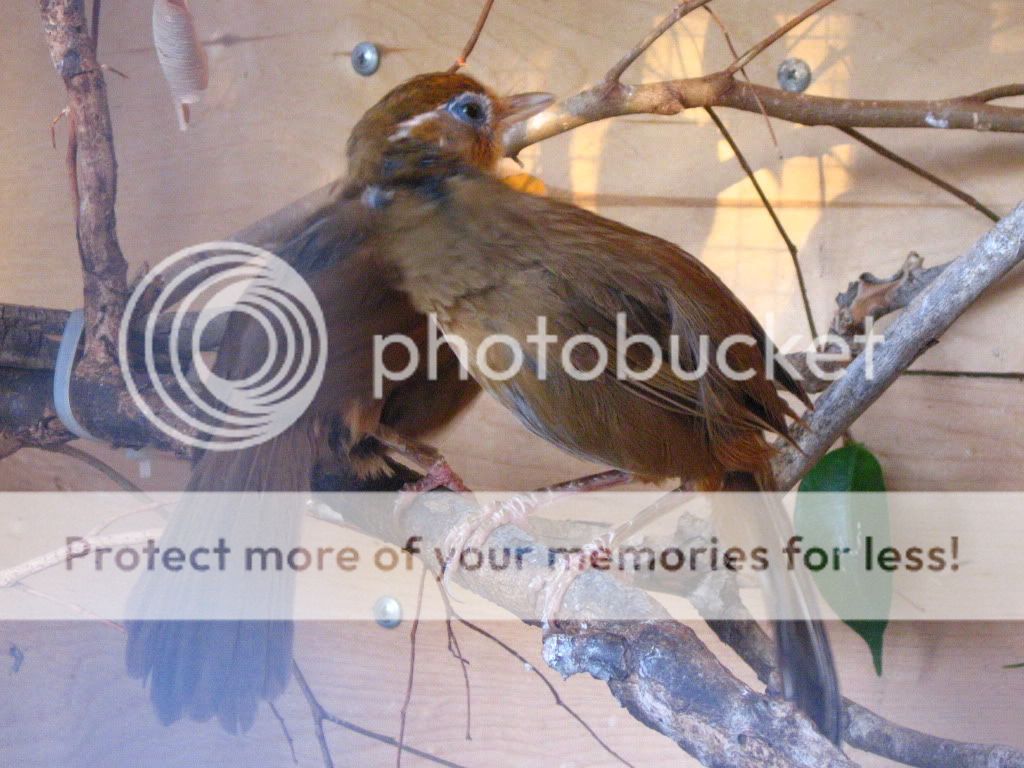
Here is a pair of Hwamei that I plan to breed next year:

Breeding Season of white-rumped shama is Over. Time for Molting
Last egg batch of the season did not yield any babies. No hatch due to unfertile eggs. He he, the male shama did a great job as a father of six batches. He's a father of total 14 babies and feeding them non-stop every batch; however, the female shama did a spectacular job as a mom. She laid like 30 eggs total this season and also care and feed all her babies very well. Most of my shama are currently molting or about to enter molting season. Feeding schedule with large quantity of insect such as cricket and cockroach (approx. 40 to 50 crickets per day) and supplies with multi-vitamin will be the main thing I concentrate on during molting season. Beside cricket and cockroach, I also feed them occasionally with earthworm, guppy fish, and small mealworm.
Within few weeks, I'll re-build all the aviary to be able to care for them little easier and move them to new location (facing East) with the hope that the aviary will be little cooler in the Summer and has morning sunlight instead of afternoon sunlight (facing West) as of current.
Within few weeks, I'll re-build all the aviary to be able to care for them little easier and move them to new location (facing East) with the hope that the aviary will be little cooler in the Summer and has morning sunlight instead of afternoon sunlight (facing West) as of current.
Wednesday, September 9, 2009
Shama pair's 7th clutch update
It's been awhile since I update this blog. Fifth batch is a total loss. 2 out of 4 eggs hatched but the parents throw them out on the 4th day. I think the reason is part of my mistake to leave 2 unhatched eggs still inside the nest with 2 hatched babies. I think the parents throw those two babies out to continue to incubate the remain eggs per their instinct. Sixth batch has 4 eggs but only one hatched and the remain three eggs has chick develop inside but could not hatch. I don't know what is the reason for this but I assume part of it is the egg laied in late season which didn't have enough substance to develop a strong baby or partly due to super hot weather during those incubation time.
Here is a little clip of 7th batch of 08 season. Eleven days and no hatch yet so far. Hope I can some babies out of this batch.
Here is a little clip of 7th batch of 08 season. Eleven days and no hatch yet so far. Hope I can some babies out of this batch.
Sunday, June 21, 2009
Shama pair's 4th clutch of the 2009 season hatched
Three eggs hatched on June 16th, and the fourth one hatched the next day. I'll try to document the growing process of these babies from the time they hatch until they fled their nest 12 days later. I will only post some of the hightlight of the day and will try as much as I can to document their growing process so we can learn and understand more on the bird's behavior.
First day of hatching:
Second day of hatching part 1:
Second day of hatching part 2:
Third day of hatching: Too lazy to do it! :D
Fourth day of hatching part 1:
Fourth day of hatching part 2:
First day of hatching:
Second day of hatching part 1:
Second day of hatching part 2:
Third day of hatching: Too lazy to do it! :D
Fourth day of hatching part 1:
Fourth day of hatching part 2:
Subscribe to:
Posts (Atom)
 |