Current Update News

Showing posts with label Nutrients. Show all posts
Showing posts with label Nutrients. Show all posts
Tuesday, August 24, 2010
Earthworm, another additional food source
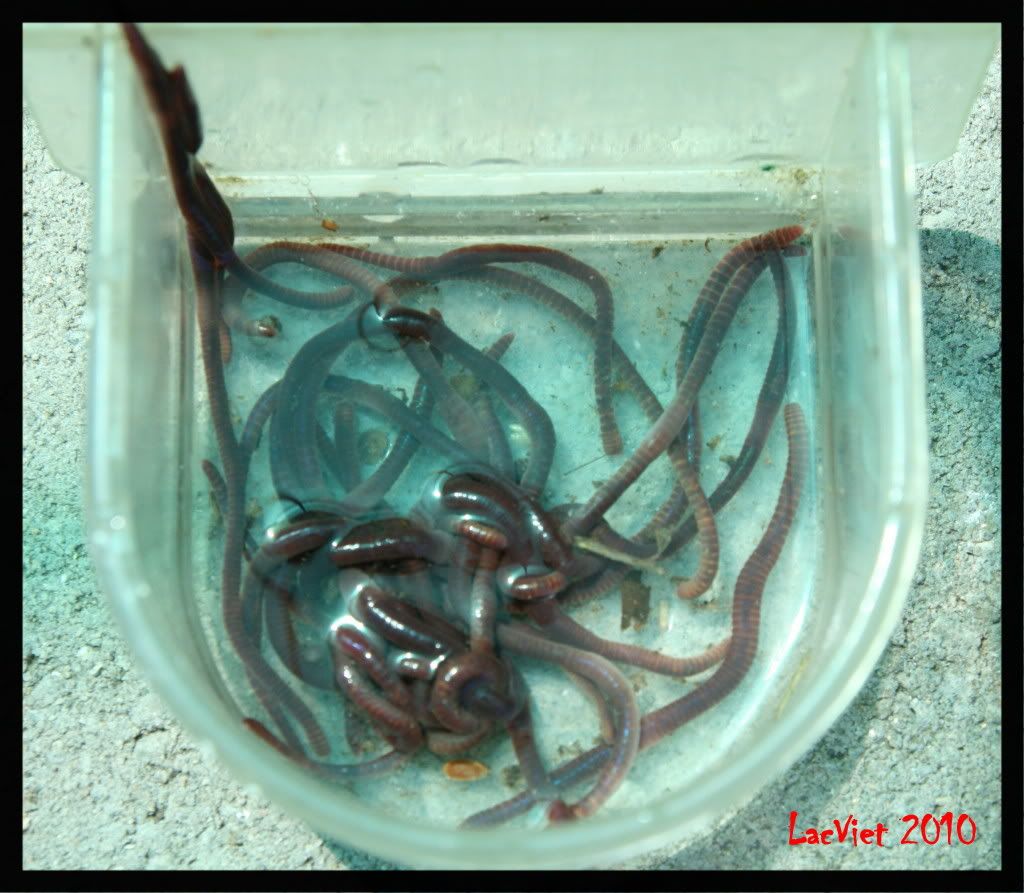
Earthworm that I found in my backyard during digging the soil can be an additional food source for the shama thrush. I know these earthworms are safe to feed the birds because I do not spray any insecticide/ or any harm chemical in my yard. All the birds are eating the earthworms and even feed to their chicks if given plenty. My backyard doesn't big enough to have unlimited supply of earthworms so I consider feeding earthworms as treat food, not a staple food that can be feed everyday.


Sunday, August 15, 2010
Another live food source: Blaptica Dubia
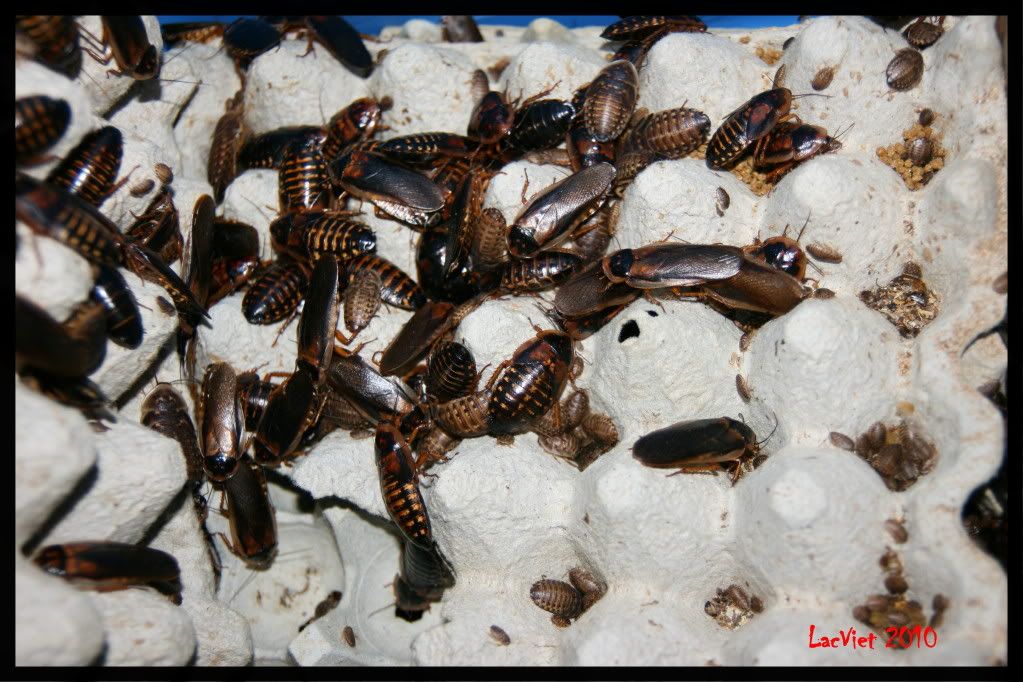
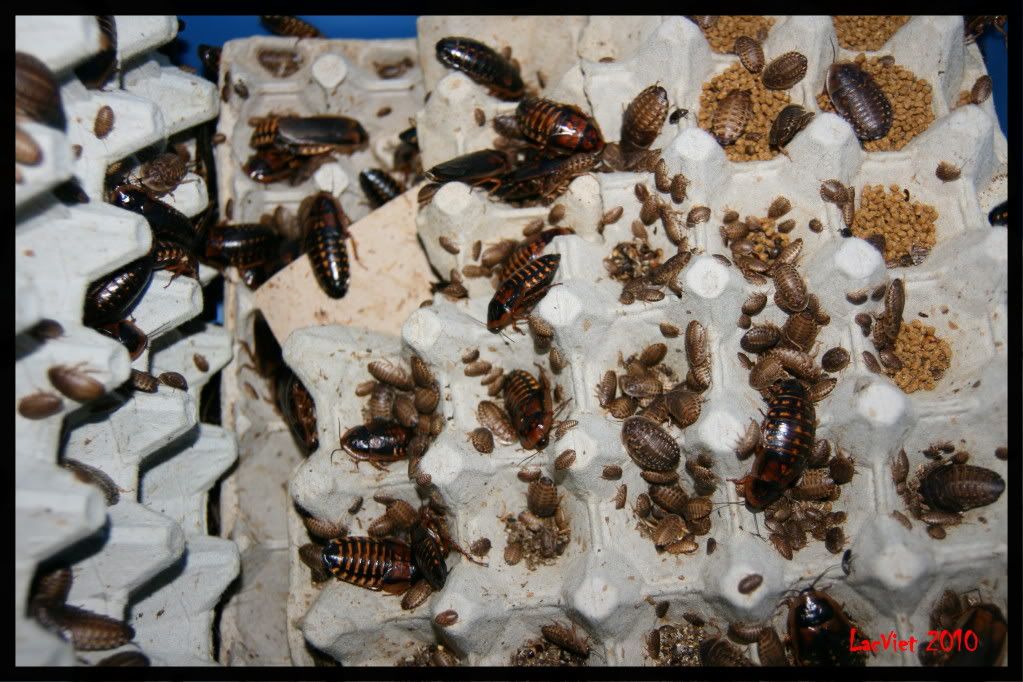
If you remember, I posted a while back about my friend DT who breeds crickets, mealworms, superworms, Blatta lateralis, and Blaptica dubia (http://lacvietchoelua.blogspot.com/2010/01/build-your-own-supply-of-live-insect-to.html). I copy DT's footstep and also try to breed B. lateralis (about 1.5 years ago) and B. dubia (about a year ago). I start out with about 300 mix/adult D. dubia and about a year later, I would say that I still have at least 3,000 dubia roaches right now (very conservative number) with regular weekly feeding of about two hundred or so roaches to all of the birds for the last 3-4 months. The adult roach can reach close to 2in in length and mature at around 5 months. I think they are slow growth compare to B. lateralis, but they are slower than B. lateralis and almost no smell at all. When feeding these roaches to the shama thrush, only smallest babies or immature roaches at around 1cm can be feed as these roaches are almost round shape when at 1 inch long or less. Bigger roaches (1 inch or more in length) has relative hard shell and too big for the shama thrush to tear into small bite size. It would take very long time for the shama thrush to eat big roach so I only feed small one.
These B. dubia roaches are very easy to keep as long as some basic requirements are met. Keep them warm and provide regular food (anything from dried food for bird, fish, dog, cat, etc... to fruits, carrots, potato, and most veggies)/water are the only two requirements (beside container to keep them) to success keeping and breeding these roaches. They are very hardy and not easy to die like crickets. In no time, anyone who keep them can have lots and lots of baby roaches. Because of slow growing and mature rate, starting with few hundred roaches can be enough to feed one or two shama thrush all year round without the need to buy other live foods (but I still believe feeding variety of live foods will keep the shama thrush healthy and thrive in long term in captivity).
One other note, I found that most shama thrush will choose to eat crickets over B. dubia or B. lateralis if given a choice. They also pick crickets to feed their young over B. dubia or B lateralis if given a choice. The reason is the outer cover of crickets is much softer than the roaches and maybe the taste is better :-))


These B. dubia roaches are very easy to keep as long as some basic requirements are met. Keep them warm and provide regular food (anything from dried food for bird, fish, dog, cat, etc... to fruits, carrots, potato, and most veggies)/water are the only two requirements (beside container to keep them) to success keeping and breeding these roaches. They are very hardy and not easy to die like crickets. In no time, anyone who keep them can have lots and lots of baby roaches. Because of slow growing and mature rate, starting with few hundred roaches can be enough to feed one or two shama thrush all year round without the need to buy other live foods (but I still believe feeding variety of live foods will keep the shama thrush healthy and thrive in long term in captivity).
One other note, I found that most shama thrush will choose to eat crickets over B. dubia or B. lateralis if given a choice. They also pick crickets to feed their young over B. dubia or B lateralis if given a choice. The reason is the outer cover of crickets is much softer than the roaches and maybe the taste is better :-))
Thursday, August 12, 2010
Venomous spider as food for the Shama Thrush?
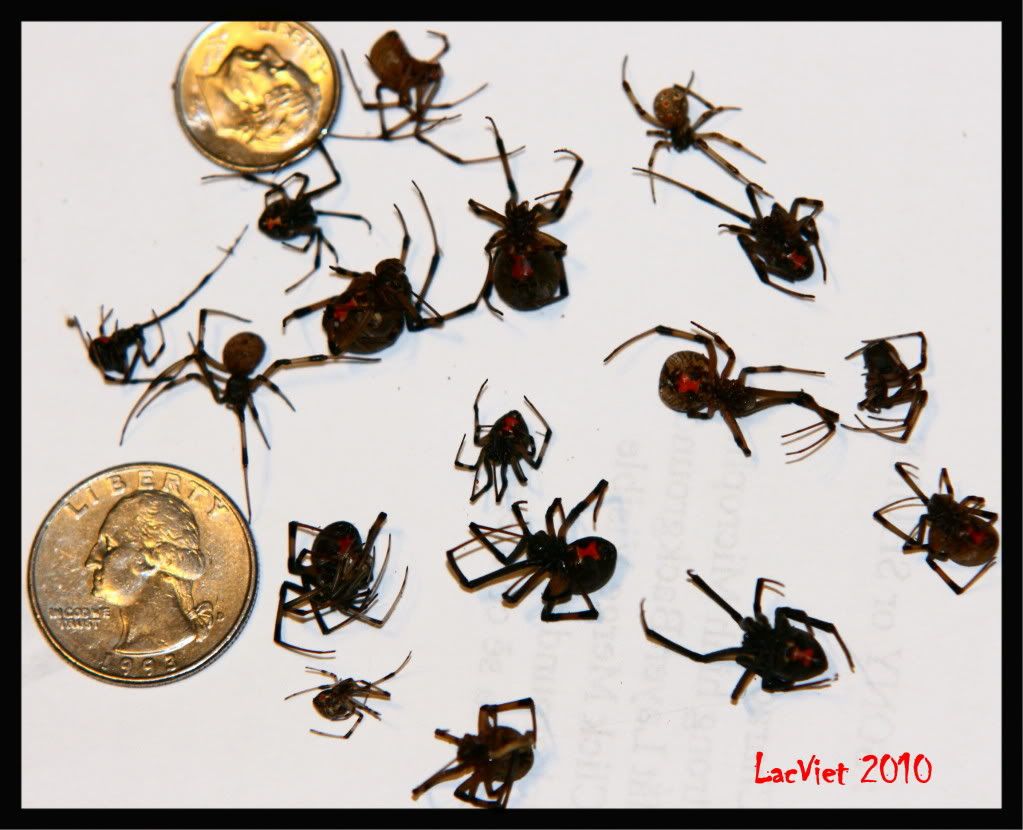
The picture below are some of the widow spider that I found in the backyard. I know these spiders are highly venomous and great harm can occur if get bitten. In the US, these little spiders can be found almost everywhere in the backyards, gardens, or any secluded, protected sites around the house. Total of 5 species of widow spider in the US and judging from the picture that I took, there are at least 2 species of widow spider: the infamous black widow spider and the brown widow spider. At night with long forceps and a flashlight, those spiders are easy catch. I usually catch around 20 adult widow spiders every couple of months and feed to all of my Shama Thrush on the next day. I killed the spider first before feeding to the bird and all of the birds just love to eat those spiders. So far, I have feed all of my shama thrush widow spider (few spiders every couple of months for each bird) for the last 2 years without any adverse effect to the bird. In fact, the bird just went crazy when seeing a spider and just can't wait to eat one just like giving candy to kid. :)
I don't know any benefit to the bird by eating spider but according to few researched paper, spider in general contains high level of taurine acid. Feeding baby bird with high taurine acid food, according to article in sciencedaily.com "... were on average much bolder and better at learning in adulthood, than their counterparts who were not fed the extra taurine." (http://www.sciencedaily.com/releases/2007/08/070824220328.htm) During the last 2 years of giving few spiders to the bird, I did not see parent shama bird feed their chicks any spider. The parents always eat all the spiders that I give them.

I don't know any benefit to the bird by eating spider but according to few researched paper, spider in general contains high level of taurine acid. Feeding baby bird with high taurine acid food, according to article in sciencedaily.com "... were on average much bolder and better at learning in adulthood, than their counterparts who were not fed the extra taurine." (http://www.sciencedaily.com/releases/2007/08/070824220328.htm) During the last 2 years of giving few spiders to the bird, I did not see parent shama bird feed their chicks any spider. The parents always eat all the spiders that I give them.
Monday, February 22, 2010
Winter time and available of live food source
Winter time is a time that live food is scarce and hard to find one in large quantity. It is always hit hard for hobbyists who keep insect eating animals such as lizards and insectivore bird right about after mid-winter passed, near spring time. This is the time that most feeder insect (such as crickets, mealworms, waxworms,etc.) farm did not have enough supply to sell. One of the reason is because of insect in generals need great deal amount of warm to be able to grow and breed, and winter time cause them to slow growth and slow down the breeding cycle. Another reason is that winter is also a time of rain, and with the low temperature and high humidity combined, this combination can cause disease in insect's colony and kill them off in large quantity. Winter storm in certain area can hinder the shipping of those crickets across country. Since the farms produce less quantity of feeder insect they either they raise the price up which none of the farms want to do, keep the same price but sell less quantity than what suppose to be (which they usually do), or they sell in very limited quantity per customer. Some farm might have to shut down for few weeks because they didn't have enough to sell. In addition, the farm also charges higher shipping cost due to they have to add head pack to keep the crickets alive or we must pay premium shipping cost (usual 2 day guarantee delivery) so that the crickets can be sure still alive when arrived at our home. This is happens to few of us last week as the farm we usual buy did not have any crickets to sell due to some kind of disease cause most of the farm's cricket to die. Because we usually buy enough supply for two week at a time, so most of us did not have crickets to feed our birds for two weeks. Luckily, I have back up source to buy crickets with reasonable price, mealworms as addition live food source, and still have few thousands of B. lateralis in the garage so I have no issue. With about a dozen of insect eating birds, few days of no live food is ok, but few weeks of no live food is devastating to the birds. Because the demand of live insects is so large in the U.S and there are several of insect farms across the country, there is rarely a time that we as a hobbyist could not buy those insects such as cricket in this hard winter time but we might have to pay more than usual due to shipping cost of extra heat pack. So having back up source of live food to buy, feed the bird additional live food source, and/or raising few of the live food source yourself can guarantee that the birds have constant supply of live food to eat and more importantly, no extra money to spend! :)
Friday, January 15, 2010
Build your own supply of live insect to feed insectivore birds
DT is one of my close friend who is also my bird keeping mentor (especially white-rumped shama) send me few pics of his setup of breeding his own live insects to feed his shama. As you can see in those pics below, he breeds mealworms, crickets, two type of cockroaches (B. lateralis and B. dubia) and very successful with them. He said that he haven't bought any live insects from the store ever since he starts those breeding colony. I also breed B. lateralis as well as few other friends and one thing that we all agree to success in raising your own live insects is heat. Keeping those insects warm is one of the most important thing if you want to have constant supply of live insects to feed the birds. As what to feed them, regular dog, cat food is cheap, good nutrients, and easy to buy at any pets shop. Shallow water dish, water gel can be use to keep them hydrate. Depends on how many birds you keep, have several containers of one kind of insect in several stage of life development is necessary to keep enough supply of insect to feed the bird at all time. I still have a colony of few thousands of B. lateralis that I original bought 6,000 of them back in June 09 and I feed all the birds with those insects almost everyday in addition of bought crickets from the store. Those roaches breed very well if keep them warm.


Friday, January 1, 2010
Breeding wax worm: Another live food for white-rumped shama and other insectivore birds
Recently, one of my friend says that he is thinking of breeding wax worm to feed his birds instead of buying from the shop. I also get interest in this topic as I currently breed Rusty Reds (Blatta lateralis) to feed all of my birds. I might try breeding them just to see how easy/hard it is and see if breeding wax worm is worth the time/cost instead of buy from store or order online. Few friends of mine also have great success breeding cricket, mealworms, and rusty reds. From what I research on the internet, breeding wax worm is not hard but what I concern is the cost of making the food for those wax worm larvae. Breeding your own food source for the birds is definitely cheaper than buying from the store or order online, but sometimes, it is not worth it as cost, time, and labor might exceed the cost of just buying it. Wax worm is a great addition food source for shama and other insectivore birds. It is great to condition or fatten up the bird after sickness or stress as wax worm has very high fat contents (20%). As far as I see, all insectivore birds love wax worm and it is very easy to cause the bird to become fat and obesity if one does not control how much wax worm to feed to the bird. I would not advice to feed the bird exclusive wax worm for a long period of time. Even every bird loves wax worm and it has lots of fat content and decent protein level (16%), wax worm lacks other vitamins, calcium, and many amino acids necessary to become a sole live food source for bird. Again, variety of diets is the key to keep the bird healthy and happy. Healthy and happy (stress free) bird will have great chance of breeding and gives healthy babies.
Link to how to breed wax worm:
http://www.ca.uky.edu/entomology/entfacts/ef011.asp
http://www.exotic-pets.eu/waxworms.php
Wax worm breeder kits:
http://www.waxwormkit.com/orders/index.php?main_page=index&cPath=1
Link to how to breed wax worm:
http://www.ca.uky.edu/entomology/entfacts/ef011.asp
http://www.exotic-pets.eu/waxworms.php
Wax worm breeder kits:
http://www.waxwormkit.com/orders/index.php?main_page=index&cPath=1
Thursday, December 17, 2009
Variety in diets for White-rumped shama and another live food source: Minimealworms - Tenebrio obscurus
I always believe variety in diet for any captive animals is one of the main key for success keeping and breeding that particular animals. White-rumped shama is mainly insect feeder so feeding the bird with variety insects (dead or alive) help to keep them in healthy state and avoid the synchrome of "picky eater." It is widely known in fish and reptile keeping that feeding the animals strictly his/her favorite live feeder food for a long time can lead to deficiency of certain vitamin (which can result in sickness or even death) and very hard to convert that animal to eat other less favorite live feeder food later on. No particular one kind of live feeder food can be sole staple in a diet. Variation of foods is the only way to provide our beloved animals complete nutrients required. Each live feeder food will offer a certain key ingredients to bring the shama or any animals in general to healthy state provided other factor such as housing, water, cleanness of aviary/cage are also in good condition. Cricket has good protein source and easiest way to "gutload" with multivitamin and calcium. Waxworm has lots of fat which can be a good food for quickly bring undernourishment bird back to health. Phoenix worm can provided good source of natural calcium. Small lizard, frog, or small fish can provide great source of calcium and protein. There are many live feeder food that can feed to the shama but those above are somewhat commonly available. Depend where you are locate, some live feeder insects are easily find than others. In some countries or states, and depends on the season you can catch wild live insects to give to the bird but make sure the wild caught insects are not sprayed with insecticide or carried parasites that can harmful to the bird. In my opinion, if feeding the bird your own wild caught live insects, it is better to either quarantine them for few weeks to a month before feeding to the bird or freeze them to kill off any internal parasites. Wild caught food is almost certainly has more complete nutrients than farm raise one, but farm raise insects have less risk of transmitting parasite than the wild counterpart. Minimealworm is rarely available in the State and expensive. All the shama love to eat them as they move very quickly unlike the cousin regular mealwormTenebrio molitor which is slow moving; however, in term of cost/nutrient/quantity per feed minimealworm is not a good choice to use to feed the shama. As the name suggest, minimealworm is very small so each shama can have easily 50 or so per feeding, not counting they are cost like three times more than regular mealworm. In conclusion, feed those minimealworm as treat once in a while is ok, but feeding those worms regularly will broke out pocket very soon! hehe.
Top view (the meter shows in reference is in cm)

Underside view

Top view (the meter shows in reference is in cm)

Underside view

Friday, December 11, 2009
Dried food for white-rumped shama
There are many different dried food that commercial made for insectivore bird but none specifically made for white-rumped shama. In Southeast Asia where this species is native, bird keeper usually made his own special mix of dried food for the shama beside feeding live wild caught insects. Specific ingredients and amount is often kept secret or varies depend on the keeper. Basically, roast broken rice under low heat until it turns somewhat dark yellowish, but do not let it turns brown. Take chicken egg yolk (no egg white) and mix with roasted broken rice. Slowly roast the mixture again until dry and then can feed to the bird along with daily live foods. Some people want to add roasted peanut, roasted corn, and/or sun dried shrimp, fish, or insects to the mix. If they want to feed the bird dried food in powder form, then put everything into the food processing after roasted each ingredients separately or if they want to feed the bird pellet form, then adding egg yolk last to the mix powder and use meat grinder machine to make pellet form.
As for myself and many hobbyists in the State, commercial dried insectivore food is the best choice to use to feed our bird as most of us didn't know the exact formula or too much time consuming to make one. Mazuri Insectivore and Orlux Insect Patee Premium are the two popular dried food choice as both food have high crude protein level (around 28%) and provided variety of vitamins. Some people also import/buy dried food from Asia and mix with whatever ingredient that they feel will help the bird. I have tried both of the dried food above but since I only keep bird for about a year, I can't tell which one is better than other; however, according to one of the best friend/mentor of mine in bird keeping, Orlux Insect Patee Premium mixed with dried cook chicken egg yolk yields good result with good song performance and tail length in bird which is the method that I also use. Mazuri Insectivore also gives satisfactory result but since I want to add more ingredients to the dried food (to somehow try to make a perfect dried food for shama), Orlux Insect Patee Premium is the better choice for me. During the course of bird keeping since last year, I also mix the Orlux/egg yolk powder with Mazzuri pellet, fish food pellet, and powder grasshopper. Combination with feeding variety of live foods and gutload the crickets/cockroaches with the same bird food and dog food, the result is good in term of increase tail length on the second molt of H1N1 but so far I'm still not completely satisfied as I notice most of my bird are reluctant to eat dried food (except the Hwamei which eat like pig :) ). My friend who feed his birds with the same dried food (minus some of the extra stuffs I add in) and all his birds are eagerly to eat dried food with large amount. Maybe with those extra stuffs that I added in cause the food to have different/funky smell which the bird didn't like? Come to think of it, I think so!
Recently, I found a place to sell freeze dried silkworm pupae which use to feed to koi fish. According to online sources, freeze dried silkworm pupae has min crude protein of 55.3% , min crude fat of 32% (I know the live food composition table in previous post listed silkworm only has 9.6% protein which I believe is true protein percentage, not crude. Crude protein is total protein of a feed includes true protein and other nitrogen containing substances such as ammonia, amino acids and nitrates). When I mix 1:4 ration of freeze dried silkworm pupae to Orlux insect food, suddenly all the shama eat dried food with joys. I think the smell of dried silkworm powder makes the dried food more tasty. Hopefully with extra protein added to the dried food, it can help to keep all the bird in healthy state.
As for myself and many hobbyists in the State, commercial dried insectivore food is the best choice to use to feed our bird as most of us didn't know the exact formula or too much time consuming to make one. Mazuri Insectivore and Orlux Insect Patee Premium are the two popular dried food choice as both food have high crude protein level (around 28%) and provided variety of vitamins. Some people also import/buy dried food from Asia and mix with whatever ingredient that they feel will help the bird. I have tried both of the dried food above but since I only keep bird for about a year, I can't tell which one is better than other; however, according to one of the best friend/mentor of mine in bird keeping, Orlux Insect Patee Premium mixed with dried cook chicken egg yolk yields good result with good song performance and tail length in bird which is the method that I also use. Mazuri Insectivore also gives satisfactory result but since I want to add more ingredients to the dried food (to somehow try to make a perfect dried food for shama), Orlux Insect Patee Premium is the better choice for me. During the course of bird keeping since last year, I also mix the Orlux/egg yolk powder with Mazzuri pellet, fish food pellet, and powder grasshopper. Combination with feeding variety of live foods and gutload the crickets/cockroaches with the same bird food and dog food, the result is good in term of increase tail length on the second molt of H1N1 but so far I'm still not completely satisfied as I notice most of my bird are reluctant to eat dried food (except the Hwamei which eat like pig :) ). My friend who feed his birds with the same dried food (minus some of the extra stuffs I add in) and all his birds are eagerly to eat dried food with large amount. Maybe with those extra stuffs that I added in cause the food to have different/funky smell which the bird didn't like? Come to think of it, I think so!
Recently, I found a place to sell freeze dried silkworm pupae which use to feed to koi fish. According to online sources, freeze dried silkworm pupae has min crude protein of 55.3% , min crude fat of 32% (I know the live food composition table in previous post listed silkworm only has 9.6% protein which I believe is true protein percentage, not crude. Crude protein is total protein of a feed includes true protein and other nitrogen containing substances such as ammonia, amino acids and nitrates). When I mix 1:4 ration of freeze dried silkworm pupae to Orlux insect food, suddenly all the shama eat dried food with joys. I think the smell of dried silkworm powder makes the dried food more tasty. Hopefully with extra protein added to the dried food, it can help to keep all the bird in healthy state.
Wednesday, December 9, 2009
Live food composition
This is a summary table of some of the live food that we use to feed white-rumped shama and by no way this is the complete summary of all live food. I collect the information from multiple website on internet and I know that some information in this table is not the same with other website posted. I try to use the information that from scientific studied or at least seems to be somewhat scientific studied rather than from live food supplied website. Each method studied might yield a slightly different result and even the same live food but from different region or different food feeding as caught in the wild or farm raise can give total different quality of fat, protein, etc. With this tabel, I hope it can shed some new knowledge on which live food is best or which combination of live food is best for our beloved bird.
NOTE: I should clarify that I recently found out that Silkworm pupae has at least 55.3% crude protein which roughly about the same as 9.6% as the collected table below (crude protein = true protein aka organic nitrogent x 6.25 which assumed protein has 16% nitrogen). I do not know all the protein percentage in the table below is crude or true protein but looks like most of them are true protein or at least calculated based on the moist insect mass not as dried mass. If calculate as dried mass, crickets should have approx. 64% crude protein based on this article:
http://www.nagonline.net/Technical%20Papers/NAGFS00397Insects-JONIFEB24,2002MODIFIED.pdf
NOTE: I should clarify that I recently found out that Silkworm pupae has at least 55.3% crude protein which roughly about the same as 9.6% as the collected table below (crude protein = true protein aka organic nitrogent x 6.25 which assumed protein has 16% nitrogen). I do not know all the protein percentage in the table below is crude or true protein but looks like most of them are true protein or at least calculated based on the moist insect mass not as dried mass. If calculate as dried mass, crickets should have approx. 64% crude protein based on this article:
http://www.nagonline.net/Technical%20Papers/NAGFS00397Insects-JONIFEB24,2002MODIFIED.pdf
| Fat ( % ) | Protein ( % ) | Calcium (ppm) | Calcium (mg/100g) | Phosporous (ppm) | Iron (mg/100g) | Vitamin C (mg/kg) | Moisture ( % ) | Fiber ( % ) | Ash ( % ) | Carbohydrates ( % ) | |
| Crickets (Acheta domesticus) | 6 | 21 | 345 | 21.53 | 4328 | 9.5 | 105.9 | 71.96 | 1.29 - 3.2 | 1.52 - 2.17 | 3.06 |
| Mealworm (Tenibrio molitor) | 13.64 | 18.65 - 21 | 133 | 3.28 | 3345 | N/A | 38.1 | 58.74 - 62.89 | 2 | 1.2 | 3.62 - 4.00 |
| Superworm (Zophoba morio) | 14.19 - 17.9 | 18.92 | 124 - 173 | 10.8 | 2320 | N/A | 9.8 | 58.91 - 61.92 | 2.6 | 1.29 | 5.81 |
| Phoenix worm (Hermetia illucens linnaeus) | 9.4 | 17.3 | 8155 | N/A | 5355 | N/A | N/A | N/A | N/A | N/A | 5.81 |
| Roach (B. Laterallis) | 5.13 | 36.5 | N/A | N/A | N/A | N/A | N/A | 63.63 | 1.19 | N/A | N/A |
| Wax worm larva (Galleria mellonella) | 20.12 - 22.19 | 15.7 | 283 | 13.14 | 2161 | N/A | 23.6 | 61.73 | 1.6 - 7.69 | 1.02 | 2.54 |
| Fly larva | 5.96 | 15.32 | N/A | N/A | N/A | N/A | N/A | 69.02 | 2.7 | 1.24 | 8.46 |
| Silkworm pupae | 5.6 | 9.6 | N/A | 41.7 | N/A | 1.8 | N/A | 75 | N/A | 7 | 2.3 |
| Earthworm (Dendrabaena veneta) | 2 | 10 | N/A | N/A | N/A | N/A | N/A | 85 | N/A | 1 | N/A |
| Giant Water Beetle | 8.3 | 19.8 | N/A | 43.5 | N/A | 13.6 | N/A | N/A | N/A | N/A | 2.1 |
| Red Ant | 3.5 | 13.9 | N/A | 47.8 | N/A | 5.7 | N/A | N/A | N/A | N/A | 2.9 |
| Small Grasshopper | 6.1 | 20.6 | N/A | 35.2 | N/A | 5 | N/A | N/A | N/A | N/A | 3.9 |
| Large Grasshopper | 3.3 | 14.3 - 26.8 | N/A | 27.5 | N/A | 3 | N/A | N/A | 2.4 | 1.2 | 2.2 |
| Termite | N/A | 14.2 | N/A | N/A | N/A | 35.5 | N/A | N/A | N/A | N/A | N/A |
| Beef (lean ground) | 16 - 25 | 27.4 | N/A | N/A | N/A | 3.5 | N/A | N/A | N/A | N/A | 0 |
Monday, November 2, 2009
Frozen Ants Eggs
Recently, one of my bird friend found a source of frozen ant eggs, and he show me where to get them. The frozen ant eggs is sell in Thai-Lao market and fortunately enough, I find near by Thai-Lao market that sells it. The cost is $5 for a frozen package that weight about 226gr or 8oz. So far, all the birds are happy to eat them. Hope with those frozen ant eggs as additional food source, all the shama can boost up its energy and be better form this year.

H4N1 sing:
H4N1 eats frozen ant eggs:
H5N1 takes a bath:

H4N1 sing:
H4N1 eats frozen ant eggs:
H5N1 takes a bath:
Friday, October 9, 2009
Main supplements for White-rumped Shama
This is the list of all the supplements that I use for Shama. The main supplement that everyone should have all the time (unless you can duplicate exactly what shama eating in the wild) is Vitamin B complex. In breeding season, Calcium is very important especially for the female. Not enough reserve calcium in the body to form egg can cause soft egg shell, egg binding, or death in the female. Multi-vitamine is another the supplement that need to keep the bird healthy. These are the big three supplements that everyone who keeps Shama should have at all time.
![]()
![]()
![]()


Subscribe to:
Posts (Atom)
 |