The female comes out to eat, drink, and take a bath around noon like every other day and she takes a little break from incubation job. This time, the male shama comes in the nest and incubate for the total of little over 9 min. The female can't wait any longer to incubate so she jump in the nest while the male still sitting inside and tries pushing him out. This is the 6th day of incubation period.
Current Update News

Tuesday, April 14, 2009


Is male shama incubate his eggs?
This is the question that seems no one can give a definitive answer. With the newly camera install on the second clutch, I were able to observe the male jump into the nest and incubate the eggs. Even with only few minutes long, the male shama, at least in this case, does incubate his eggs when his mate when out to eat and/or take a bath.
The clip below is only two and a half minutes long due to I cut most part of non-active clip to save time watching, but if you notice the time, the male incubates for little over 6 min long.
The clip below is only two and a half minutes long due to I cut most part of non-active clip to save time watching, but if you notice the time, the male incubates for little over 6 min long.
Total of 5 eggs on second clutch.
On April 8th 2009, total of 5 eggs were laid and begin incubated by the female. All the babies in the first clutch are still stay with their parents until they can eat by themselves. The father is the one mostly feed his babies with occasionally the mom feeds her babies when she was out to eat and bath.
Monday, April 6, 2009
Video clip female shama incubate eggs
Today, Sunday April 5, 2009, there are two eggs in the nest which the female shama laid since Saturday. So approximate 5 days when the babies left the nest, or about 17 days when the first clutch hatch, or about 28 days when the female start incubate the first clutch, the female is ready to lay the second clutch.
This clip is only 20 second long but total time incubate is approx. 20 mins.
This clip is only 20 second long but total time incubate is approx. 20 mins.
Thursday, April 2, 2009
6 days after left the nest
Update on those babies after 6 day left the nest or 18 days old after hatched.


Sunday, March 29, 2009
Four babies shama
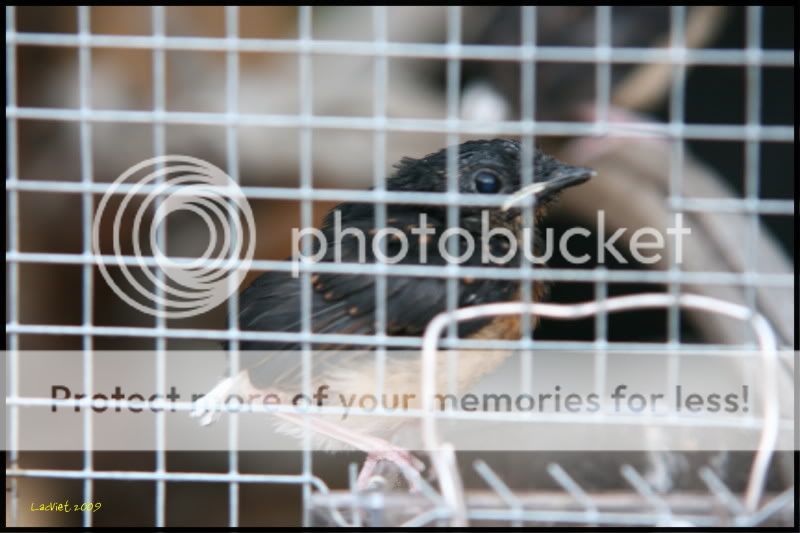
After 12 days of incubation, there are four babies left the nest on March 28th, 2009. Looks like that there will 2 male and 2 female due to different intensity of feather color. Both parents are very protect their young. The two presume to be male almost make constant chip sound. It seems that both parents try to feed the young almost constantly to the point that sometimes the young still full that they didn't want to eat. The father when ever he brings food to his young, he pecks at the side of baby's beak to stimulate the baby open its beak or peck on the head. All four babies seem healthy and strong.
The father carries waste sack to dispose:

Babies:



Tuesday, March 17, 2009
Eggs hatched
After many days of waiting and constantly feed them plenty of insects, on Tuesday morning March 17, 2009, discover 4 empty egg shells on the floor of the aviary. 3 empty egg shells are from the bottom end part of the egg (the pointy side) and 1 empty egg shell is from the top round part. So I can conclude at least 3 eggs hatched. Few hours later in the morning, observe the father catch small insect and fly to the nest, possible feeding the babies. Looks like that the female incubated for 11 days. Outside temperature during the incubation time is pretty low with the high around 75F, and low around 50F. Here are the pics of empty egg shells. The one in the aviary is too far for me to reach in and take it out.


Thursday, March 12, 2009
First Pair of Shama
This pair is acquired soon after the young one in Dec. 2008. The male is probably at least 3-4 years old, while the female is about the same age. Introduce them together in the aviary (6ft H x 6ft L x 3ft W) in mid Feb. 09. At first, the male chased the female around the aviary but soon he relax a little and allow the female flied out of the bush to come to the feeding dish to eat and drink. Around March 3rd or 4th, first egg is laid. Observed incubate the eggs on Friday night. I'll keep both my fingers cross hope my first ever breeding experiment in this type of songbirds will have good result with many babies, hehe......


Sunday, March 1, 2009
Shama gathering from few aviculturists
 Some of us, an avid aviculturist, with the same interest in breeding captive white rumped shama to maintain good population of this type of songbird have a gathering together on Feb. 01, 09. This gathering is a chance to us to get together and sharing information, experiences with each other on the art of keeping, breeding, and training this songbird. The meet is fun and full of information. We are all excited as the breeding season is approaching and our goal is to develop a bird who sings well with full of stamina, and long soft tail. Most of us have decent birds as breeder with tail is between 7in to 9in long.


Subscribe to:
Comments (Atom)
 |