Current Update News

Showing posts with label Feeding. Show all posts
Showing posts with label Feeding. Show all posts
Tuesday, August 24, 2010
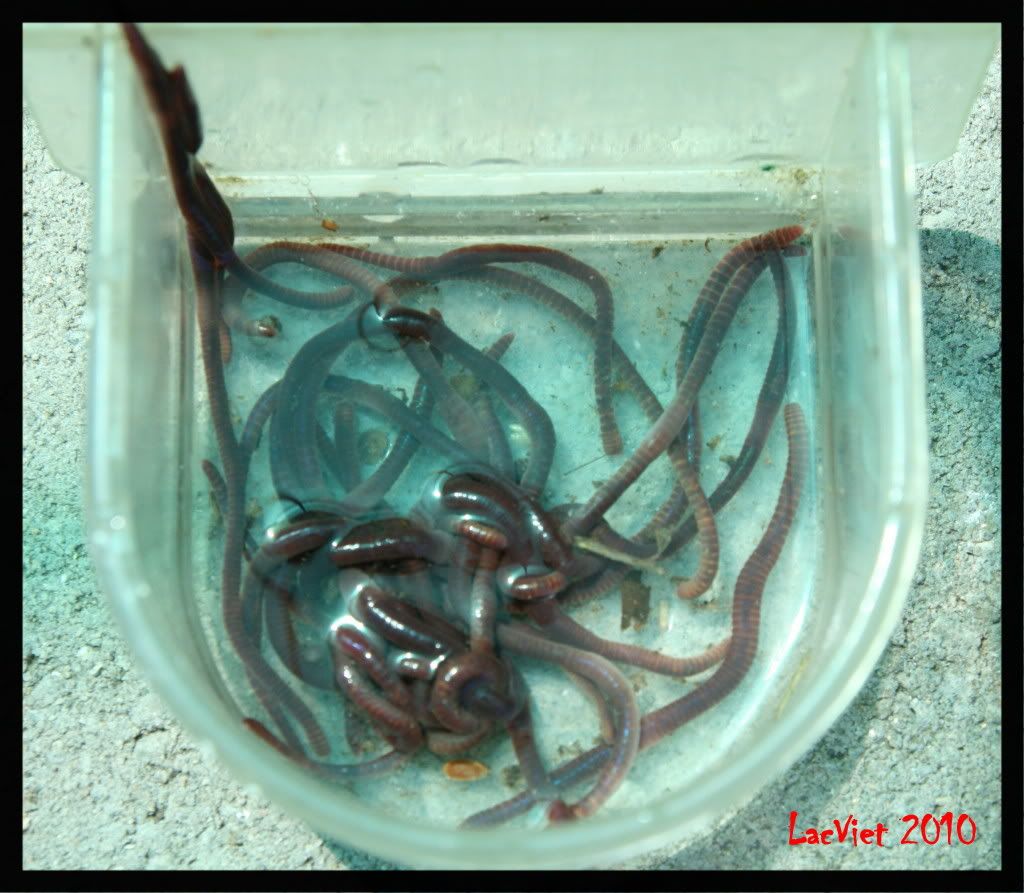
Earthworm, another additional food source
Earthworm that I found in my backyard during digging the soil can be an additional food source for the shama thrush. I know these earthworms are safe to feed the birds because I do not spray any insecticide/ or any harm chemical in my yard. All the birds are eating the earthworms and even feed to their chicks if given plenty. My backyard doesn't big enough to have unlimited supply of earthworms so I consider feeding earthworms as treat food, not a staple food that can be feed everyday.


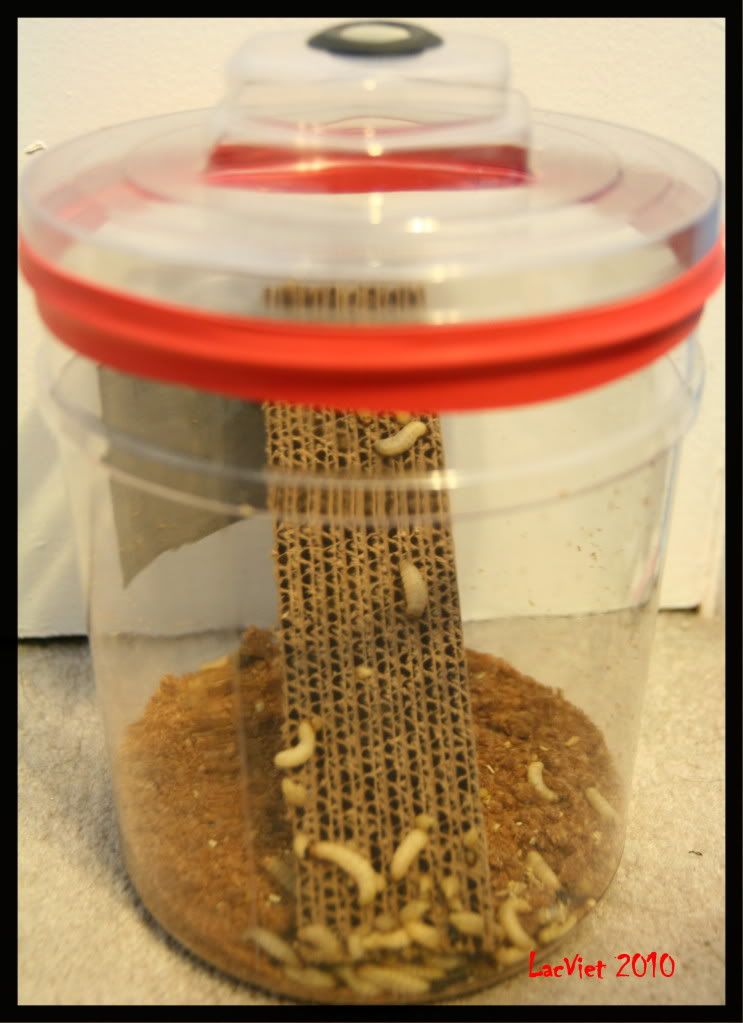
First time raising waxworm for bird
This is the breeding waxworm kit that I bought from the internet a while ago but haven't have a chance to set up until now. The kit contains a clear plastic container with lid, food for waxworm, and egg laying material. The lid have small screen mesh on top to allow air exchange. Egg laying material is just like a carton box that cut and glue to resemble a bee nest. Waxworm when mature will turn to a moth and lay eggs inside bee nest so basically anything that have multiple of small holes that the moth can lay eggs into can be use. As for the food, I have to buy the food as I don't know the entire contents of it but I know it has honeybee since the waxworm feed on wax/honeybee in nature.
If you want to read more on how to raise waxworm, you can read this post that I posted a whild back: http://lacvietchoelua.blogspot.com/2010/01/breeding-wax-worm-another-live-food-for.html as it has links to where to purchase a breeding kit as well as article on breeding/raising them.
If you want to read more on how to raise waxworm, you can read this post that I posted a whild back: http://lacvietchoelua.blogspot.com/2010/01/breeding-wax-worm-another-live-food-for.html as it has links to where to purchase a breeding kit as well as article on breeding/raising them.
Sunday, August 15, 2010
Another live food source: Blaptica Dubia
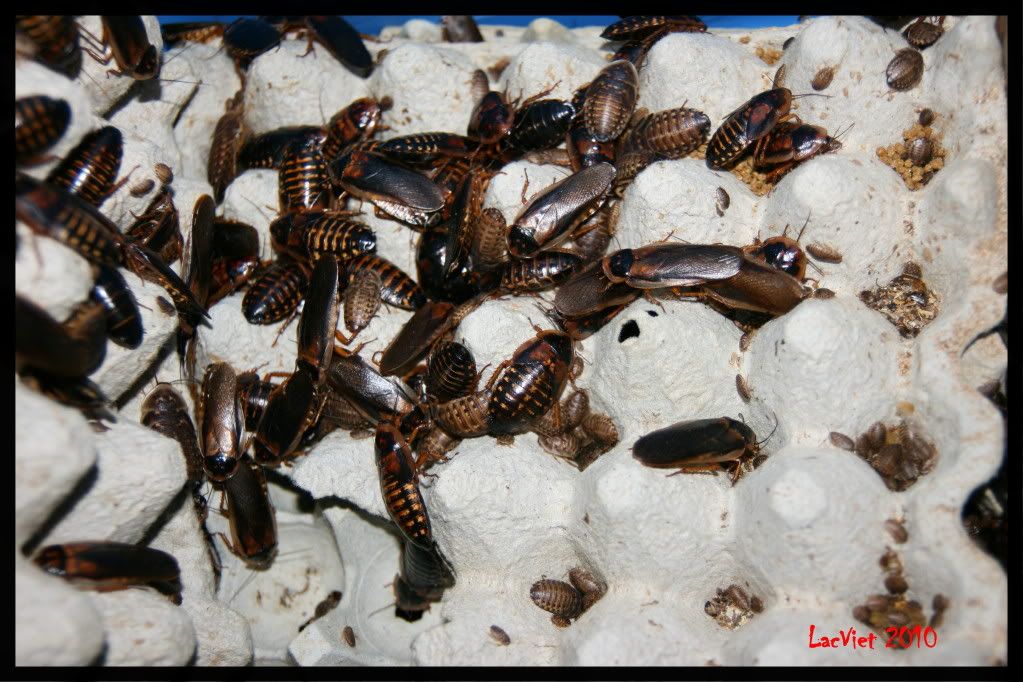
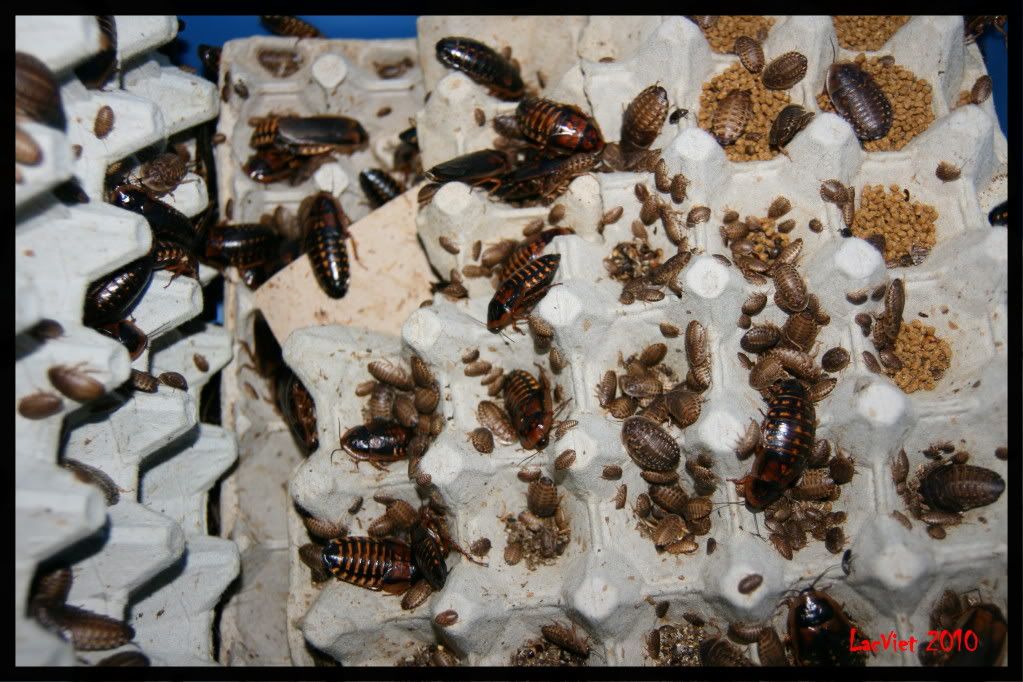
If you remember, I posted a while back about my friend DT who breeds crickets, mealworms, superworms, Blatta lateralis, and Blaptica dubia (http://lacvietchoelua.blogspot.com/2010/01/build-your-own-supply-of-live-insect-to.html). I copy DT's footstep and also try to breed B. lateralis (about 1.5 years ago) and B. dubia (about a year ago). I start out with about 300 mix/adult D. dubia and about a year later, I would say that I still have at least 3,000 dubia roaches right now (very conservative number) with regular weekly feeding of about two hundred or so roaches to all of the birds for the last 3-4 months. The adult roach can reach close to 2in in length and mature at around 5 months. I think they are slow growth compare to B. lateralis, but they are slower than B. lateralis and almost no smell at all. When feeding these roaches to the shama thrush, only smallest babies or immature roaches at around 1cm can be feed as these roaches are almost round shape when at 1 inch long or less. Bigger roaches (1 inch or more in length) has relative hard shell and too big for the shama thrush to tear into small bite size. It would take very long time for the shama thrush to eat big roach so I only feed small one.
These B. dubia roaches are very easy to keep as long as some basic requirements are met. Keep them warm and provide regular food (anything from dried food for bird, fish, dog, cat, etc... to fruits, carrots, potato, and most veggies)/water are the only two requirements (beside container to keep them) to success keeping and breeding these roaches. They are very hardy and not easy to die like crickets. In no time, anyone who keep them can have lots and lots of baby roaches. Because of slow growing and mature rate, starting with few hundred roaches can be enough to feed one or two shama thrush all year round without the need to buy other live foods (but I still believe feeding variety of live foods will keep the shama thrush healthy and thrive in long term in captivity).
One other note, I found that most shama thrush will choose to eat crickets over B. dubia or B. lateralis if given a choice. They also pick crickets to feed their young over B. dubia or B lateralis if given a choice. The reason is the outer cover of crickets is much softer than the roaches and maybe the taste is better :-))
These B. dubia roaches are very easy to keep as long as some basic requirements are met. Keep them warm and provide regular food (anything from dried food for bird, fish, dog, cat, etc... to fruits, carrots, potato, and most veggies)/water are the only two requirements (beside container to keep them) to success keeping and breeding these roaches. They are very hardy and not easy to die like crickets. In no time, anyone who keep them can have lots and lots of baby roaches. Because of slow growing and mature rate, starting with few hundred roaches can be enough to feed one or two shama thrush all year round without the need to buy other live foods (but I still believe feeding variety of live foods will keep the shama thrush healthy and thrive in long term in captivity).
One other note, I found that most shama thrush will choose to eat crickets over B. dubia or B. lateralis if given a choice. They also pick crickets to feed their young over B. dubia or B lateralis if given a choice. The reason is the outer cover of crickets is much softer than the roaches and maybe the taste is better :-))
Thursday, August 12, 2010
Venomous spider as food for the Shama Thrush?
The picture below are some of the widow spider that I found in the backyard. I know these spiders are highly venomous and great harm can occur if get bitten. In the US, these little spiders can be found almost everywhere in the backyards, gardens, or any secluded, protected sites around the house. Total of 5 species of widow spider in the US and judging from the picture that I took, there are at least 2 species of widow spider: the infamous black widow spider and the brown widow spider. At night with long forceps and a flashlight, those spiders are easy catch. I usually catch around 20 adult widow spiders every couple of months and feed to all of my Shama Thrush on the next day. I killed the spider first before feeding to the bird and all of the birds just love to eat those spiders. So far, I have feed all of my shama thrush widow spider (few spiders every couple of months for each bird) for the last 2 years without any adverse effect to the bird. In fact, the bird just went crazy when seeing a spider and just can't wait to eat one just like giving candy to kid. :)
I don't know any benefit to the bird by eating spider but according to few researched paper, spider in general contains high level of taurine acid. Feeding baby bird with high taurine acid food, according to article in sciencedaily.com "... were on average much bolder and better at learning in adulthood, than their counterparts who were not fed the extra taurine." (http://www.sciencedaily.com/releases/2007/08/070824220328.htm) During the last 2 years of giving few spiders to the bird, I did not see parent shama bird feed their chicks any spider. The parents always eat all the spiders that I give them.
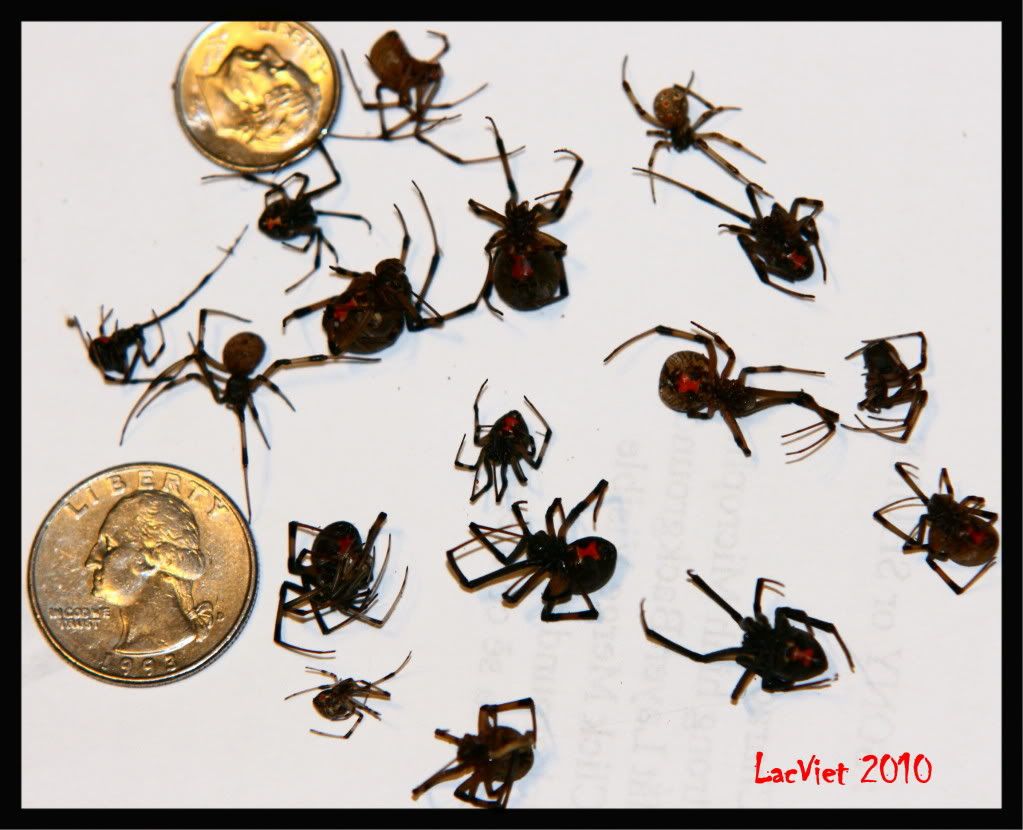
I don't know any benefit to the bird by eating spider but according to few researched paper, spider in general contains high level of taurine acid. Feeding baby bird with high taurine acid food, according to article in sciencedaily.com "... were on average much bolder and better at learning in adulthood, than their counterparts who were not fed the extra taurine." (http://www.sciencedaily.com/releases/2007/08/070824220328.htm) During the last 2 years of giving few spiders to the bird, I did not see parent shama bird feed their chicks any spider. The parents always eat all the spiders that I give them.
Sunday, June 27, 2010
Hand rear shama thrush chicks
This is the first time I ever hand rear any chicks so I learn as I go on. Thanks to the internet, I am able to read as much information available from other hobbyist's blogs, forums, message boards about this topic. These two chicks are about 6 days old. and have not feed for about two hours. Similar to what parent bird feed them, I pick medium size crickets which approx. 1.5cm long, remove two big rear legs, crush the head of the cricket and feed to the chicks. I will try to feed the chicks approximate every hour with couple of crickets or until they stop begging for food. I also dip/dust few crickets with multivitamin, vitamin B complex, and calcium (powder). Since they are 6 days old, I just keep them indoor in styrofoam incubator with temperature at night will be 78F and day will be around 85F.

This is the wastes of the chicks after big feeding:

Seven days old. Their eyes are start to peak to see the outside world for the first time:

06/29/2010: Eight days old and they are fully open their eyes. I think they can see and recognize the surroundings. I can see clearly their tail feathers now compare to yesterday. I feed them about 10 times per day from 8AM in the morning to about 11PM at night. Each time is about 2-3 crickets.

This is typical poops that the chicks secret through out the day. Sometimes smaller, sometimes large like this (appprox. 1cm across, 3cm long) due to how long between feeding and how much feeding I feed the chicks in previous feed.

06/30/2010: Nine day olds.
 07/01/2010: Ten days olds


07/06/2010: One chick died early morning of 07/04 during my out of town trip. The cause is that I did not have time to feed it throughout the day (only 3-4 times per day), and de-hydration due to turn on A/C in the hotel room. The other chick is surviving the four days out of town trip, but is a little weak. So far, the lone survivor still eating as normal but half sleep and did not active much.
07/10/2010: The other chick also died but due to some kind of infection on the eye. One of the eye seems very wet and the bird close its eye most of the time. Few days later, the bird almost close its eyes all the time and pass away.

This is the wastes of the chicks after big feeding:

Seven days old. Their eyes are start to peak to see the outside world for the first time:

06/29/2010: Eight days old and they are fully open their eyes. I think they can see and recognize the surroundings. I can see clearly their tail feathers now compare to yesterday. I feed them about 10 times per day from 8AM in the morning to about 11PM at night. Each time is about 2-3 crickets.

This is typical poops that the chicks secret through out the day. Sometimes smaller, sometimes large like this (appprox. 1cm across, 3cm long) due to how long between feeding and how much feeding I feed the chicks in previous feed.

06/30/2010: Nine day olds.


07/06/2010: One chick died early morning of 07/04 during my out of town trip. The cause is that I did not have time to feed it throughout the day (only 3-4 times per day), and de-hydration due to turn on A/C in the hotel room. The other chick is surviving the four days out of town trip, but is a little weak. So far, the lone survivor still eating as normal but half sleep and did not active much.
07/10/2010: The other chick also died but due to some kind of infection on the eye. One of the eye seems very wet and the bird close its eye most of the time. Few days later, the bird almost close its eyes all the time and pass away.
Monday, June 21, 2010
Hwamei eats Cherry fruit
In previous blog as see here (Hwamei eats papaya fruit), I documented that one of the male Hwamei that I keep eats Papaya fruit. The same Hwamei also like to eat cherry. He can devour whole cherry in just little over half an hour.


Friday, May 7, 2010
Papa feeds his chick
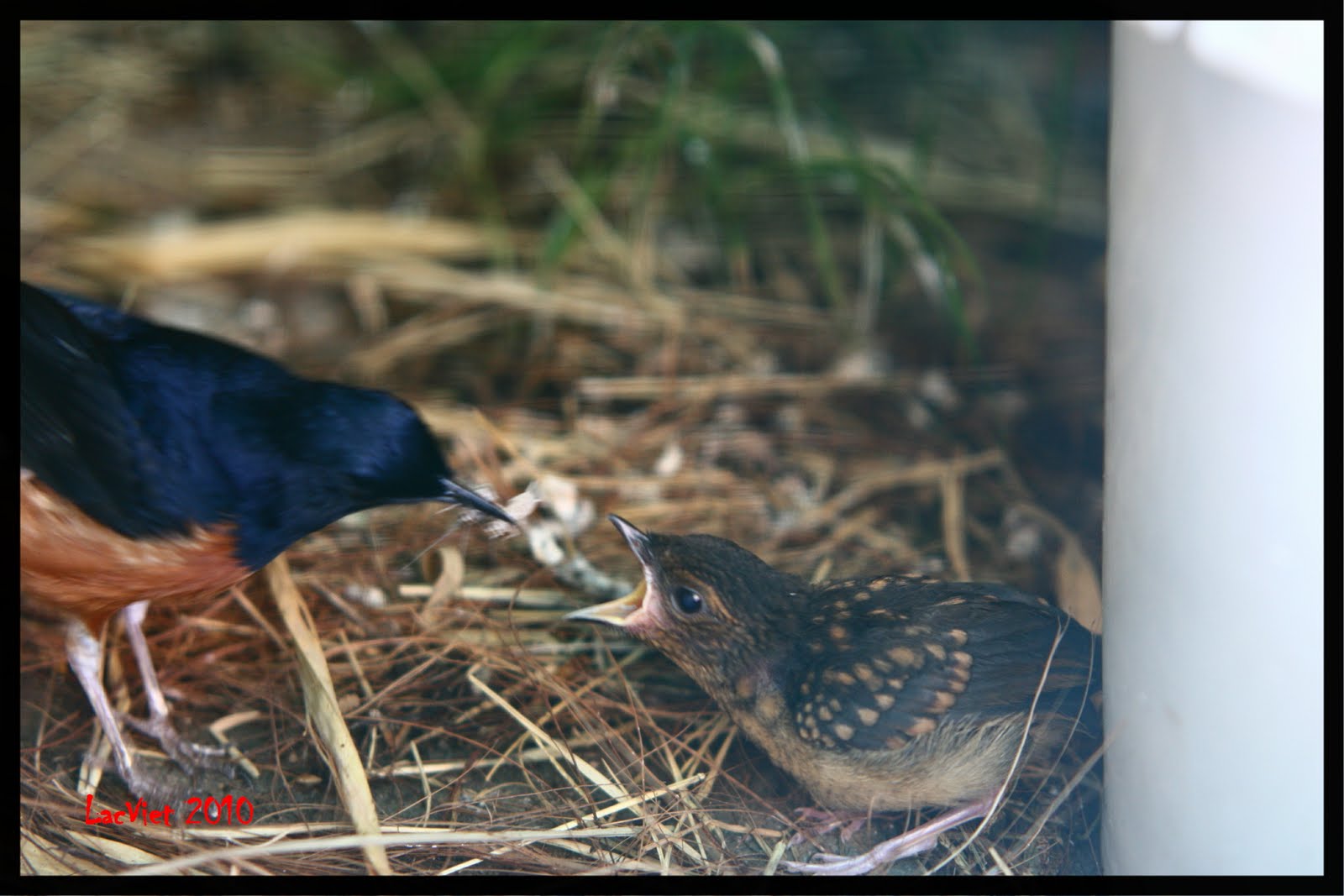
In previous post, mama bird feeds her chicks. In this post, we can see that papa bird (H1N1) also feeds his chick. From what I observed though my birds, mama bird feed her chicks mostly while the chicks still in the nest (from hatch until about 12 days or so), while papa bird starts to feed his chicks more frequently after the chicks left the nest. The role of mama in feeding her chicks after they left the nest still play an important factor to keep chicks healthy.


1 of 4 series

2 of 4 series
3 of 4 series

4 of 4 series

Thursday, May 6, 2010
Mama feeds her chicks
The superworm is little too big for 13 days old chick so mama has to try to feed her chick a couple times before the chick can get a hold of the superworm and eat it.
(Please click on the pictures to see bigger pic)


(Please click on the pictures to see bigger pic)


Subscribe to:
Comments (Atom)
 |