This blog is a repository of information on the White-rumped Shama (Copsychus malabaricus) including breeding information, and other songbirds/pets that I keep from time to time. I can be contacted at lacvietcrct@gmail.com.
Showing posts with label Enviromental Factor. Show all posts
Saturday, February 27, 2010
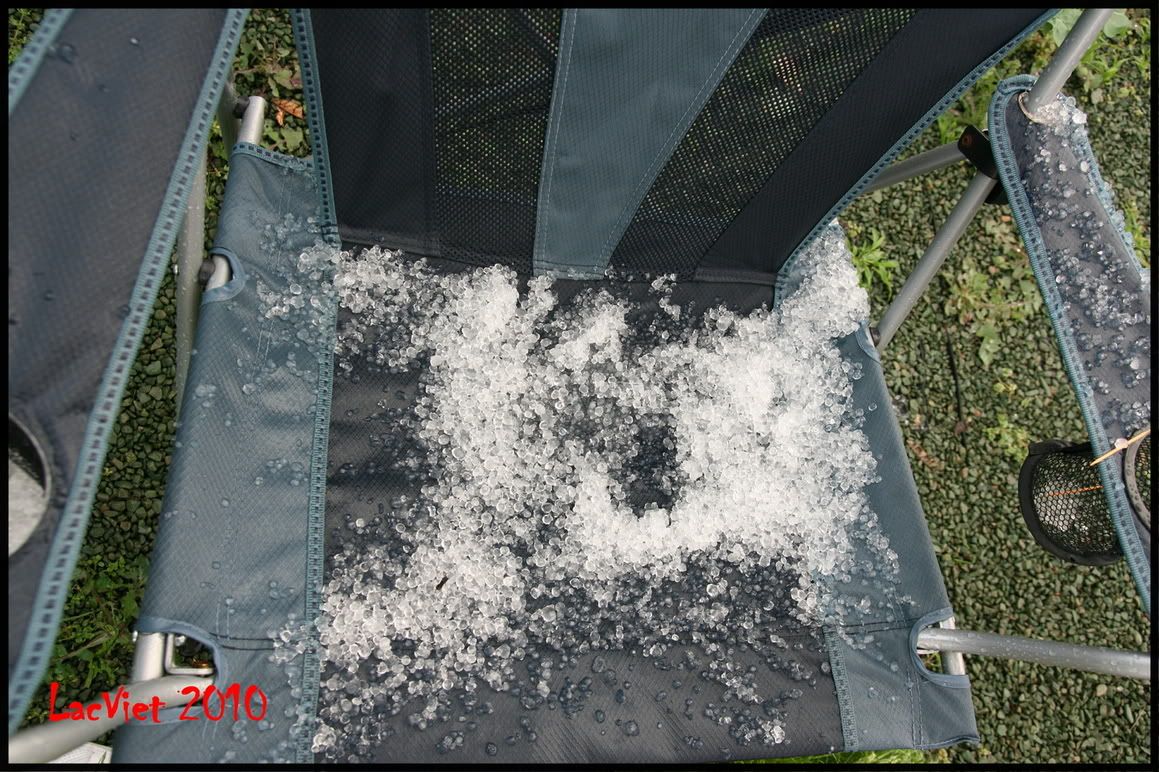
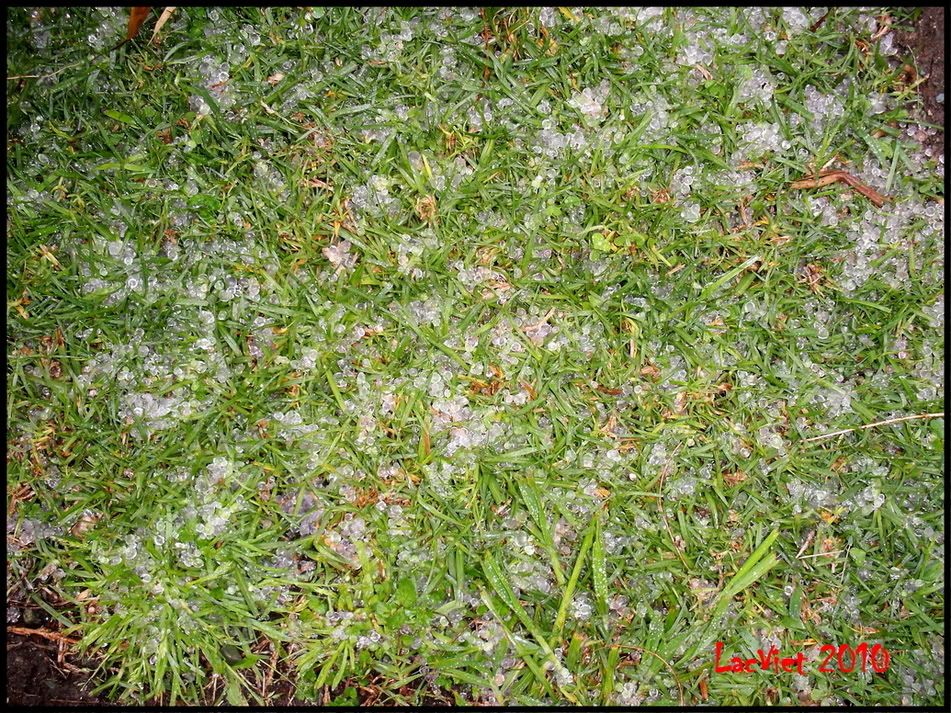
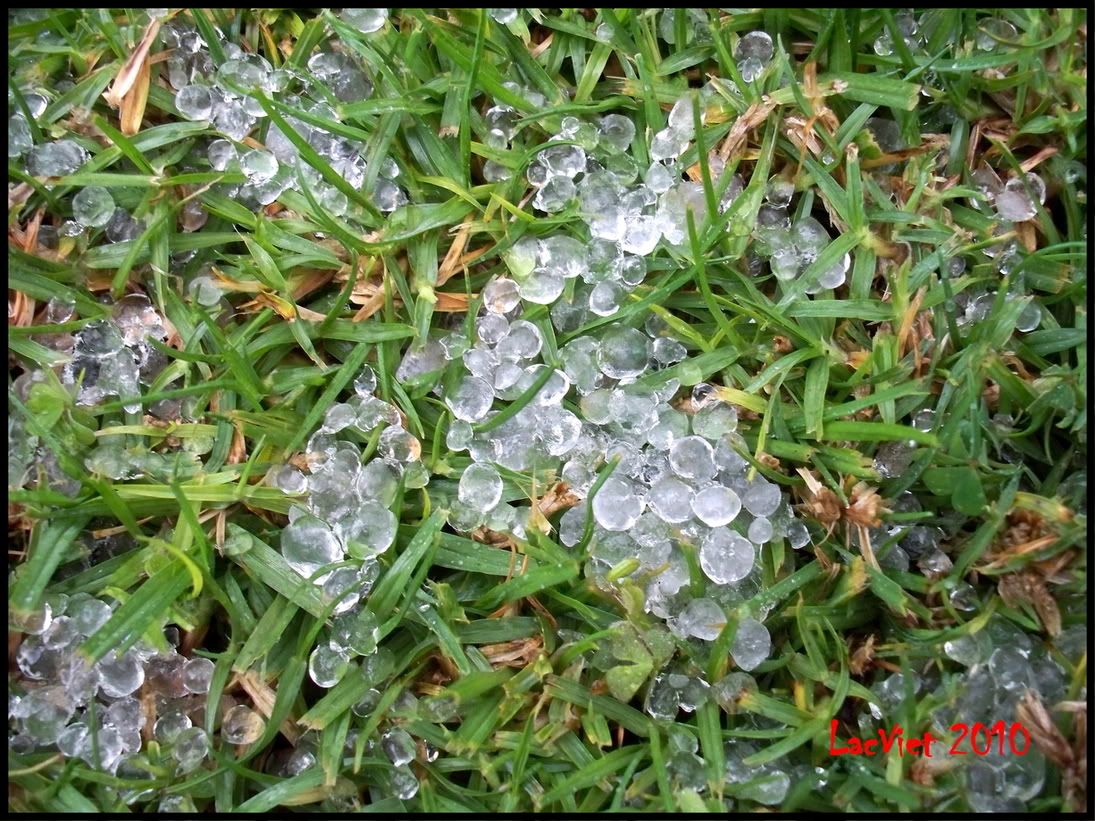
What a crazy day today: Windy, Rainy, Hail, and Rainbow!
The weather here lately is not co-operate with breeding white-rumped shama project. This year is one of the most rain fall in a very long time. There are also lots of strong wind blowing this rainy season. Today we have strong wind up to 25mph early in the morning, rain with showers/thunderstorms almost whole day, and HAIL! We haven't see hail for a very long time, probably at least 10 years since the last one. So far the first introduced pair is fine but no sign of breeding yet (building nest, lay eggs). The second introduced pair (H32N1 and H5N1) is staying together with no chasing around from the male. Again, still no sign of breeding yet. As for the pair that I really want to breed (H4N1 and H1N1), the male is ready to breed but the female seems not. She is too scare of him everytime he flies near her. I can see that he did not try to fight, bite, or doing in aggressive nature but she is still very nervous and would fly all over the aviary trying to hide from him. I'll try to introduce this pair again in another week or when the temperature is warmer with lots of sunshine.
Saturday, January 23, 2010
Article about making breeding simple for Canary by Linda Hogan, but I think we can apply to Shama Thrushes as well
The following are couple articles from Linda Hogan who specialize in breeding Canary. Her blog can be view by click the following link: http://canarytales.blogspot.com/
In her articles, she talk on how to condition the canary into breeding cycle and how to breed canary indoor. I found this article is very informative and could apply to white-rumped shama breeding as well. There is very interesting information about vitamin E and the different time used for male canary and female canary. Without further introduction, here are what Linda wrote on her blog:
This inexpensive floor light was purchased at Target and has the advantage of distributing light to various levels of cages even in a large aviary. With a small watt energy efficient bulb it provides a dim light warning for 30 minutes after the overhead lights go out so that any hens that were caught off the nest when the bright overhead lights went out can see to go back to their nests.
Back To The Basics
Although there are many options for working with our birds and supporting breeding behavior, the endless number of choices can be overwhelming. With this series, I will focus on the minimum requirements to meet our birds needs rather than all the endless options.
Day Lengthening - Natural Method: Adequate day length is necessary for hormonal changes that bring on breeding behavior. While small sized varieties may breed when day length is a minimum of 12 hours, better results are achieved when the day length is 14 to 15 hours. The simplest way to control lighting is to let the birds get up with the sun and go to bed with the sun. Using the natural lighting pattern, days lengthen gradually, about 15 minutes longer each week. This means the birds will likely start breeding naturally in April and continue through May, possibly into June.
Abrupt Day Lengthening - Critical Timing: If you elect to breed earlier, the easiest way is to use an automatic timer and suddenly change the day length to 14 1/2 hours three weeks before the desired breeding date. Timing the abrupt day lengthening, requires some preparatory dietary changes to get the birds ready. Cocks require about six weeks, while hens require only about three weeks of conditioning to get ready for breeding. (That is in addition to calcium which should be fed to hens year round or at a very minimum three months prior to breeding.) Using this simple sudden lighting change method, the timer is changed only once, before nesting begins. It is critical not to make abrupt day lengthening once a hen starts setting, any abrupt day lengthening then may result in her re-cycling and abandoning her eggs and nest.
More Gradual Day Lengthening - Faster Than Natural Day Lengthening: Some breeders prefer to gradually change their automatic timers every few days or weekly by 30 minutes. It will brings the birds in earlier than natural lighting but has a disadvantage besides much more effort, the gradual method produces less sperm production than the abrupt method.
Making Sure The Hen Is On The Nest Overnight: Rather than have the lights go off suddenly and catching some hens off their nest, it is good to have a 30 minute dim light time so that when the lights finally go off, the hens will be setting on their nests. The simplest way to do this is to set your lights coming on very early and going off about 30 minutes before natural sunset. Remember once chicks hatch you need to be in the bird room offering fresh foods when the light comes on. But do you really want to get up really early every day, especially before daylight savings time takes effect?
Using a Dimmer Light: I prefer to use a dimmer light which comes on the last 30 minutes with the regular lights and continues alone for an additional 30 minutes. As the season progresses natural day length will exceed this time but I just keep this pattern even when natural day length exceeds it. This is not a breeding problem. Lengthening days does not brings on the molt, shortening day length initiates molting.
My Simple Way Summary: I breed a variety of kinds of canaries including Borders which do much better with longer days, I abruptly change lighting to 14 1/2 plus the additional 30 minute dimmer extension. This is done after cocks have received the ABBA vitamin E for three weeks and coincides with when the hen starts the ABBA vitamin E.

Three factors: light, conditioning, and weather working in concert bring birds into full breeding condition. In part 1 of this series, we looked at simple ways to control the number of hours of daylight and how to lengthen the days to brings about hormonal changes that moves the bird into its natural breeding cycle. In part 2, I will begin looking at some minimal techniques to help bring birds into breeding condition. First, let's take a look at vitamin E.
Vitamin E - An Easy Way To Condition Canaries For Breeding
In addition to the previously identified hens need for minerals and especially calcium, better breeding results are achieved when the cock and hen receive high doses of the fertility vitamin E, during the conditioning period prior to pairing. Traditional this was done by adding fortified wheat germ oil to the seed. But the amount to give and when to give it was quite a guessing game!
A few years ago, I discovered an easier more effective product, ABBA high fertility water soluble vitamin E. One day a week six weeks before pairing, I prepare the ABBA vitamin E as directed by measuring 1/2 teaspoon of the powder and dissolving it in 1/2 gallon water. I then fill the cocks drinkers and leave that as the only source of water for 24 hours. After 24 hours, the drinkers are dumped and refilled with clean water.
After three weeks of the ABBA vitamin E once weekly treatment, the cocks will be singing vigorously and showing some signs of wanting to breed. Now is the time to abruptly lengthen the hours of day light as described in the previous post. And on the same day, I start the hens on the one day a week, 24 hour treatment with the ABBA vitamin E. This continues for the cock until I am finished breeding him but must be stopped on the hen when she lays her first egg to avoid premature hen recycling.
Many breeders do not realize the importance of controlling when and how much the hen gets of the vitamin E. If a hen is overdosed with vitamin E, she abandons the nest without going through the normal process of sitting, hatching and feeding her chicks .
In the unlikely event that a hen fails to recycle for her second clutch, she can, however, again receive the weekly vitamin E treatment.
NOTE: If you want to view the comment section, click on the title of each article. It will directs to her blog.
In her articles, she talk on how to condition the canary into breeding cycle and how to breed canary indoor. I found this article is very informative and could apply to white-rumped shama breeding as well. There is very interesting information about vitamin E and the different time used for male canary and female canary. Without further introduction, here are what Linda wrote on her blog:
Making Breeding Simple - Part 1 Lengthening Days
Back To The Basics
Although there are many options for working with our birds and supporting breeding behavior, the endless number of choices can be overwhelming. With this series, I will focus on the minimum requirements to meet our birds needs rather than all the endless options.
Day Lengthening - Natural Method: Adequate day length is necessary for hormonal changes that bring on breeding behavior. While small sized varieties may breed when day length is a minimum of 12 hours, better results are achieved when the day length is 14 to 15 hours. The simplest way to control lighting is to let the birds get up with the sun and go to bed with the sun. Using the natural lighting pattern, days lengthen gradually, about 15 minutes longer each week. This means the birds will likely start breeding naturally in April and continue through May, possibly into June.
Abrupt Day Lengthening - Critical Timing: If you elect to breed earlier, the easiest way is to use an automatic timer and suddenly change the day length to 14 1/2 hours three weeks before the desired breeding date. Timing the abrupt day lengthening, requires some preparatory dietary changes to get the birds ready. Cocks require about six weeks, while hens require only about three weeks of conditioning to get ready for breeding. (That is in addition to calcium which should be fed to hens year round or at a very minimum three months prior to breeding.) Using this simple sudden lighting change method, the timer is changed only once, before nesting begins. It is critical not to make abrupt day lengthening once a hen starts setting, any abrupt day lengthening then may result in her re-cycling and abandoning her eggs and nest.
More Gradual Day Lengthening - Faster Than Natural Day Lengthening: Some breeders prefer to gradually change their automatic timers every few days or weekly by 30 minutes. It will brings the birds in earlier than natural lighting but has a disadvantage besides much more effort, the gradual method produces less sperm production than the abrupt method.
Making Sure The Hen Is On The Nest Overnight: Rather than have the lights go off suddenly and catching some hens off their nest, it is good to have a 30 minute dim light time so that when the lights finally go off, the hens will be setting on their nests. The simplest way to do this is to set your lights coming on very early and going off about 30 minutes before natural sunset. Remember once chicks hatch you need to be in the bird room offering fresh foods when the light comes on. But do you really want to get up really early every day, especially before daylight savings time takes effect?
Using a Dimmer Light: I prefer to use a dimmer light which comes on the last 30 minutes with the regular lights and continues alone for an additional 30 minutes. As the season progresses natural day length will exceed this time but I just keep this pattern even when natural day length exceeds it. This is not a breeding problem. Lengthening days does not brings on the molt, shortening day length initiates molting.
My Simple Way Summary: I breed a variety of kinds of canaries including Borders which do much better with longer days, I abruptly change lighting to 14 1/2 plus the additional 30 minute dimmer extension. This is done after cocks have received the ABBA vitamin E for three weeks and coincides with when the hen starts the ABBA vitamin E.
Making Breeding Simple - Part 2A Conditioning
Three factors: light, conditioning, and weather working in concert bring birds into full breeding condition. In part 1 of this series, we looked at simple ways to control the number of hours of daylight and how to lengthen the days to brings about hormonal changes that moves the bird into its natural breeding cycle. In part 2, I will begin looking at some minimal techniques to help bring birds into breeding condition. First, let's take a look at vitamin E.
Vitamin E - An Easy Way To Condition Canaries For Breeding
In addition to the previously identified hens need for minerals and especially calcium, better breeding results are achieved when the cock and hen receive high doses of the fertility vitamin E, during the conditioning period prior to pairing. Traditional this was done by adding fortified wheat germ oil to the seed. But the amount to give and when to give it was quite a guessing game!
A few years ago, I discovered an easier more effective product, ABBA high fertility water soluble vitamin E. One day a week six weeks before pairing, I prepare the ABBA vitamin E as directed by measuring 1/2 teaspoon of the powder and dissolving it in 1/2 gallon water. I then fill the cocks drinkers and leave that as the only source of water for 24 hours. After 24 hours, the drinkers are dumped and refilled with clean water.
After three weeks of the ABBA vitamin E once weekly treatment, the cocks will be singing vigorously and showing some signs of wanting to breed. Now is the time to abruptly lengthen the hours of day light as described in the previous post. And on the same day, I start the hens on the one day a week, 24 hour treatment with the ABBA vitamin E. This continues for the cock until I am finished breeding him but must be stopped on the hen when she lays her first egg to avoid premature hen recycling.
Many breeders do not realize the importance of controlling when and how much the hen gets of the vitamin E. If a hen is overdosed with vitamin E, she abandons the nest without going through the normal process of sitting, hatching and feeding her chicks .
In the unlikely event that a hen fails to recycle for her second clutch, she can, however, again receive the weekly vitamin E treatment.
Sunday, December 13, 2009
Adaptation and Environment Factor that bring White-rumped Shama into breeding cycle
All creatures have amazing adaptation to new weather environment. Take human for example, we can live in basically in any weather environment from super hot Sahara desert in Africa to super cold Antarctica in South Pole. Even the white-rumped shama could not survive in cold climate like us human, it can be keep in temperate zone or more precise Mediterranean climate like Southern California without or minimal heat provided at night. In Hawaii and Florida which is more like Tropical climate, the bird can be keep and live comfortably just like in its native land. In fact, in Hawaii, white-rumped shama has establish itself and live free in several islands such as Oahu and Kauai. In colder climate, if anyone want to keep the bird, one should provide heat in cold period such as winter time or keep the bird inside the house most of the time of the year and only bring the bird to outside when temperature is warmer.
Amazingly, breeding season of white-rumped shama keep in temperate zone like Southern California is almost the same as the bird in Hawaii, or in South / Southeast Asia. In Asia, breeding season is right after the rainy or monsoon season which around January to September and peak in April to June. In Hawaii and Southern California, breeding season is from March to August which also happens at or near the end of rainy season. Following are average temperature (low and high), average rain fall, and average length of day in a year of Oahu (Hawaii, USA), SaiGon (VietNam), and Anaheim/Los Angeles (California, USA):
As we can see, daylight length might be the main factor for the bird to enter breeding cycle even the different in daylight length in Asia (where this bird is native) is little over one hour. Amount of precipitation or rain might also play some role too but compare the amount of precipitation between Asia and California, it doesn't make much sense when bird keep in California climate also enter breeding season similar time like in Hawaii and in Asia. Increase in daylight temperature might also be a factor but that could not explain why the shama can start breeding in Southern California on March with avg. temp of 70F compare to 77F in Hawaii and 92F in Saigon. Maybe it is the combination of all the factors above along with increasing available in insect food that trigger the bird to enter breeding cycle? Or maybe other factor such as barometer, UV ray from the sun, etc... is the main culprit????
Amazingly, breeding season of white-rumped shama keep in temperate zone like Southern California is almost the same as the bird in Hawaii, or in South / Southeast Asia. In Asia, breeding season is right after the rainy or monsoon season which around January to September and peak in April to June. In Hawaii and Southern California, breeding season is from March to August which also happens at or near the end of rainy season. Following are average temperature (low and high), average rain fall, and average length of day in a year of Oahu (Hawaii, USA), SaiGon (VietNam), and Anaheim/Los Angeles (California, USA):
As we can see, daylight length might be the main factor for the bird to enter breeding cycle even the different in daylight length in Asia (where this bird is native) is little over one hour. Amount of precipitation or rain might also play some role too but compare the amount of precipitation between Asia and California, it doesn't make much sense when bird keep in California climate also enter breeding season similar time like in Hawaii and in Asia. Increase in daylight temperature might also be a factor but that could not explain why the shama can start breeding in Southern California on March with avg. temp of 70F compare to 77F in Hawaii and 92F in Saigon. Maybe it is the combination of all the factors above along with increasing available in insect food that trigger the bird to enter breeding cycle? Or maybe other factor such as barometer, UV ray from the sun, etc... is the main culprit????
Wednesday, December 9, 2009
Cold and Rainy Week
Starting the begining of the week, the weather suddenly changes to much colder than normal with raining. It rains almost all day on Monday. At night, the temperature drops down to 38.7F and temperature in the morning only comes up to upper 50s F. All the birds are ok but didn't active much on that rainy day. On Tuesday, event there is no more rain but the weather is still very cold with little windy. I change all the dried food as some has little water splash in during the rain which can cause molt in a very short time. I don't want the bird eat spoiled food which can cause sickness. Sickness during cold weather is one thing I don't want the bird get as its immunity is not as strong as in the warm weather. On Wednesday morning, there is lots of sunshine and temperature should be above 60F. All birds behave as normal and start singing. The Hwamei pair was also observed to take a bath.
For those who lives in temperate zone like Southern California, which the temperature in winter can go down to nearly 0C or 32F (only a few nights during the winter season. Average night time temperature in winter is about 46F), unless keeping the bird outside all summer long until winter in an aviary, it is better to bring the bird inside the house or at least keep them inside a patio. Because white-rupmed shama is a tropical bird, it needs time to adjust to the cold weather of temperate zone. If you live in colder climate which temperature in winter can goes below 32F or stay near 32F most of the time, then the bird needs to bring inside the house or have some kind of heating system to keep them warm. From my experience since last winter, white-rumped shama and other tropical birds can live comfortable outside aviary during the winter if the bird has long time to adjust to outside temperature (i.e, keep them outside all summer long until now) and temperature only goes down to 30s F for a few days during winter season with or without heating provided at night.
Subscribe to:
Comments (Atom)