These two chicks are 1st clutch of 2010 season from H3N1 and H2N1 parents. By now, they are almost 6 weeks old and can eat/drink on their own. Actually around 3 to 4 weeks old, they begin to eat on their own thou they still beg for food from the parents if given the chance. Seems that the female has little darker color compare to normal female. The same parents produced at least one dark color female in last year which is the female H32N2 that I currently try to breed with H5N1 male.
This blog is a repository of information on the White-rumped Shama (Copsychus malabaricus) including breeding information, and other songbirds/pets that I keep from time to time. I can be contacted at lacvietcrct@gmail.com.
Friday, April 30, 2010
Egg binding
Recently, a friend of mine has issue with one of his breeding female white-rumped shama: egg binding. According to my friend, he saw the female stands/lay on the floor of the aviary in the morning, fluffy feather, and seems to have hard time breathing. Normal bird should perch on the tree branch, alert and active. As seen before in previous year, he immediately caught the bird and bring her inside the house in bamboo cage and use incandescent light to keep her warm. He then gave her few drops of liquid calcium. Few hours later, she is able to lay the egg, and seems to recover the ordeal.
In two years of bird keeping, I hear few stories of egg binding in pet birds, especially around breeding season start. Lucky for me, I haven't have this issue in all of my birds (knock on wood ;) ). Female bird when in breeding season need great amount of calcium (usually stored in the bone) to be able to form eggshell properly. Once the reserved calcium is depleted, some calcium from her own bone will be use. And when there is not enough calcium to form eggshell, the egg inside her body will has soft shell and it can cause the female bird great difficulty to lay.
Lacking of calcium in daily diet is the main cause for egg binding in pet birds, especially insectivore bird like white-rumped shama. According to bird keepers in Asia, supplement normal daily insect diet with small vertebrate animals such as small lizards, froglet, small fish, or feeding small shrimps with shell once in a while can be enough to reduce this egg binding issue. In country like where I live, small lizards and froglet are almost impossible to find, and small fish (even feeder fish) is somewhat expensive, supplement daily diet with either liquid or powder calcium is almost the only choice to prevent this issue.
For those who keeps pet birds indoor, even with plenty calcium supplement, the female bird might still get egg binding. The cause is not due to lack of calcium, but lack of Vitamin D3. Vitamin D3 is the only vitamin D form that the bird can use, found only in animal products such as eggs, milk, insects, and liver or synthesize by the bird when bird is exposed to sunlight. The short wavelength ultraviolet light in the sunlight aids in the formation of vitamin D3 on the skin. The exposed skin of the legs, feet, around the eyes, and in other areas on some birds, exude an oily compound called technically 7-dehydrocholesterol. When the ultraviolet rays strike this substance, they produce a chemical change that transforms it into cholecalciferol, or vitamin D3. The vitamin is then resorbed into the skin over a period of time to supply the birds' vitamin D requirement. These ultraviolet rays cannot penetrate window glass, though they will go through quartz glass and most clear plastics. Vitamin D3 is crucial for the absorption of calcium into the body. Without vitamin D3, whatever amount of calcium the bird eat, it will come out the bird body with all the undigested wastes.
Other causes include obesity, lack of exercise, oversized or mal-formed eggs, excessive egg laying, oviduct infection or damage, heredity and senility are all causes of egg binding.
Sign of egg binding: according to Linda Pesek (DVM) in her article "Egg binding in breeding and pet birds" here are some of the clinical signs: "A hen may appear depressed, have an abnormally wide stance, and make repeated straining motions. Some birds may be puffed yet perching, while others may be found on the bottom of the cage. Some birds may even be found dead on the floor of the cage or aviary without any previous warning. Droppings may be larger than normal or no droppings may be passed and the vent may be dilated and swollen."
Treatment: As in case of my friend, keep the bird warm (85-95F) and give couple drops of liquid calcium will do the trick, but it's all depend on when you discover the bird has issue with egg binding, and other factors such as how poor condition of the bird is. Again, here is what Linda Pesek wrote: "Egg binding should be considered an emergency. Medical treatment is initiated to stabilize the bird. The bird may be given fluids intravenously or subcutaneously as well as antibiotics, steroids and calcium. It is placed in an incubator at 85-95 degrees F with moistened air. If the egg is not passed within a few hours, additional calcium as well as certain drugs to stimulate contraction and expulsion of the egg may be administered. Sometimes it is necessary to sedate the bird with isoflurane and manually pass the egg. If this is not possible due to the large size of the egg, ovocentesis or aspiration of the egg's contents, followed by collapse of the egg and removal of the shell may be necessary." Ovocentesis or aspiration of the egg's contents can be done by using syringe with sharp needle to puncture the eggshell and remove the contents inside. Once the egg collapse, the shell can be remove using small forceps. I would imagine this process is very tricky to do and risk of infection is very high. Sterile all equipments use, antibiotic might need to give to the bird after the procedure, and proceed with great care.
Long term prevention: Review the daily diet and make change if necessary. Adding calcium supplemental 3-4 times weekly during breeding season and 1-2 times weekly when outside breeding season can help. Provide the bird with natural sunlight few hours daily or use artificial light bulb that specifically made to help bird/reptile produce vitamin D3 regularly to ensure bird can have enough vitamin D3. Give plenty of room for the bird to exercise. Observe the bird carefully during breeding season to caught the sign of egg binding early.
In two years of bird keeping, I hear few stories of egg binding in pet birds, especially around breeding season start. Lucky for me, I haven't have this issue in all of my birds (knock on wood ;) ). Female bird when in breeding season need great amount of calcium (usually stored in the bone) to be able to form eggshell properly. Once the reserved calcium is depleted, some calcium from her own bone will be use. And when there is not enough calcium to form eggshell, the egg inside her body will has soft shell and it can cause the female bird great difficulty to lay.
Lacking of calcium in daily diet is the main cause for egg binding in pet birds, especially insectivore bird like white-rumped shama. According to bird keepers in Asia, supplement normal daily insect diet with small vertebrate animals such as small lizards, froglet, small fish, or feeding small shrimps with shell once in a while can be enough to reduce this egg binding issue. In country like where I live, small lizards and froglet are almost impossible to find, and small fish (even feeder fish) is somewhat expensive, supplement daily diet with either liquid or powder calcium is almost the only choice to prevent this issue.
For those who keeps pet birds indoor, even with plenty calcium supplement, the female bird might still get egg binding. The cause is not due to lack of calcium, but lack of Vitamin D3. Vitamin D3 is the only vitamin D form that the bird can use, found only in animal products such as eggs, milk, insects, and liver or synthesize by the bird when bird is exposed to sunlight. The short wavelength ultraviolet light in the sunlight aids in the formation of vitamin D3 on the skin. The exposed skin of the legs, feet, around the eyes, and in other areas on some birds, exude an oily compound called technically 7-dehydrocholesterol. When the ultraviolet rays strike this substance, they produce a chemical change that transforms it into cholecalciferol, or vitamin D3. The vitamin is then resorbed into the skin over a period of time to supply the birds' vitamin D requirement. These ultraviolet rays cannot penetrate window glass, though they will go through quartz glass and most clear plastics. Vitamin D3 is crucial for the absorption of calcium into the body. Without vitamin D3, whatever amount of calcium the bird eat, it will come out the bird body with all the undigested wastes.
Other causes include obesity, lack of exercise, oversized or mal-formed eggs, excessive egg laying, oviduct infection or damage, heredity and senility are all causes of egg binding.
Sign of egg binding: according to Linda Pesek (DVM) in her article "Egg binding in breeding and pet birds" here are some of the clinical signs: "A hen may appear depressed, have an abnormally wide stance, and make repeated straining motions. Some birds may be puffed yet perching, while others may be found on the bottom of the cage. Some birds may even be found dead on the floor of the cage or aviary without any previous warning. Droppings may be larger than normal or no droppings may be passed and the vent may be dilated and swollen."
Treatment: As in case of my friend, keep the bird warm (85-95F) and give couple drops of liquid calcium will do the trick, but it's all depend on when you discover the bird has issue with egg binding, and other factors such as how poor condition of the bird is. Again, here is what Linda Pesek wrote: "Egg binding should be considered an emergency. Medical treatment is initiated to stabilize the bird. The bird may be given fluids intravenously or subcutaneously as well as antibiotics, steroids and calcium. It is placed in an incubator at 85-95 degrees F with moistened air. If the egg is not passed within a few hours, additional calcium as well as certain drugs to stimulate contraction and expulsion of the egg may be administered. Sometimes it is necessary to sedate the bird with isoflurane and manually pass the egg. If this is not possible due to the large size of the egg, ovocentesis or aspiration of the egg's contents, followed by collapse of the egg and removal of the shell may be necessary." Ovocentesis or aspiration of the egg's contents can be done by using syringe with sharp needle to puncture the eggshell and remove the contents inside. Once the egg collapse, the shell can be remove using small forceps. I would imagine this process is very tricky to do and risk of infection is very high. Sterile all equipments use, antibiotic might need to give to the bird after the procedure, and proceed with great care.
Long term prevention: Review the daily diet and make change if necessary. Adding calcium supplemental 3-4 times weekly during breeding season and 1-2 times weekly when outside breeding season can help. Provide the bird with natural sunlight few hours daily or use artificial light bulb that specifically made to help bird/reptile produce vitamin D3 regularly to ensure bird can have enough vitamin D3. Give plenty of room for the bird to exercise. Observe the bird carefully during breeding season to caught the sign of egg binding early.
Wednesday, April 28, 2010
How young can the white-rumped shama start to breed?
In chicken, both the hen and rooster when reach age around 6 months old, they can start to breed. Young rooster might needs few more month of age to produce fertile eggs. I wish this is the case for the white-rumped shama, but it's not! :)
As few others who breed this bird before me, and from what I learn, the female can start to lay egg at around 1 years of age (the following season after the first molt), while the male needs to be around 2 years of age to produce fertile eggs. In this breeding season, I have one pair that the male is two years old and the female is one year old. Both produced babies in their first ever clutch which confirm with what I learn. In other pair, both the male and the female are one year of age and in their first clutch, as of 16th days of incubation, no eggs hatched!
In conclusion, young shama can start to breed successful at an age of one year old in case of the female, and at an age of two years old for the male. As with other birds and other animals, first few years of breeding might not yield the most offspring. Too old or too young of a bird won't give max potential to produce offspring. I suspect that the shama will reach their full potential after 3-4 years of age.
As few others who breed this bird before me, and from what I learn, the female can start to lay egg at around 1 years of age (the following season after the first molt), while the male needs to be around 2 years of age to produce fertile eggs. In this breeding season, I have one pair that the male is two years old and the female is one year old. Both produced babies in their first ever clutch which confirm with what I learn. In other pair, both the male and the female are one year of age and in their first clutch, as of 16th days of incubation, no eggs hatched!
In conclusion, young shama can start to breed successful at an age of one year old in case of the female, and at an age of two years old for the male. As with other birds and other animals, first few years of breeding might not yield the most offspring. Too old or too young of a bird won't give max potential to produce offspring. I suspect that the shama will reach their full potential after 3-4 years of age.
Sunday, April 11, 2010
Some new pics of two chicks from first cluth '10
Chicks are couple days old after left the nest.
Chick #1: probably a male
Chick #2: probably a female
Mother (just finish taking a bath) and her two chicks enjoys the morning sun
04/11/2010: With some sun coming out today, I fill the bath container with some water. The parents are so happy to jump right in and to my surprise, both of the chicks copy their parents and also jump in the water to take a bath for the first time in their life.
Chick #1: probably a male
Chick #2: probably a female
Mother (just finish taking a bath) and her two chicks enjoys the morning sun
04/11/2010: With some sun coming out today, I fill the bath container with some water. The parents are so happy to jump right in and to my surprise, both of the chicks copy their parents and also jump in the water to take a bath for the first time in their life.
Friday, April 2, 2010
The Hwamei pair 2010 Breeding Season
The pair are introduced and live together since around Oct 2009. They are eating together, preen each other feathers since the introduction. Recently around last week of March 2010, they both start to carry on their beak nesting materials, jumping from branches to branches but seems to do not know what to do with those nesting materials. The male calls with the sound like roo..roo...roo..roo constantly and beating his wings real fast. The female sometimes answers the call of the male and starts finding nesting materials at the aviary floor and she also jumps from branches to branches to follow the male.
First week of April 2010, observed that they pick a nest site and start dropping few nesting materials into the nest; however, they have not seen to do any "fixing" of the nest site.
As of 04/11/2010: Looks like that they finish building the nest. They begins to stop carrying nesting materials to the nest. The male start to stand in front of the nest most of the time, but they still sleep at their usual spot at night (higher near the top of aviary while the nest is just about 2ft up from the floor). The nest location is hard for me to see any egg inside yet. Will patiently await to see if this pair can produce any chicks.
First week of April 2010, observed that they pick a nest site and start dropping few nesting materials into the nest; however, they have not seen to do any "fixing" of the nest site.
As of 04/11/2010: Looks like that they finish building the nest. They begins to stop carrying nesting materials to the nest. The male start to stand in front of the nest most of the time, but they still sleep at their usual spot at night (higher near the top of aviary while the nest is just about 2ft up from the floor). The nest location is hard for me to see any egg inside yet. Will patiently await to see if this pair can produce any chicks.
Wednesday, March 24, 2010
Mysterious death in new born chick
In 2009 breeding season and is my first season of breeding white-rumped shama, I encountered a few mysterious death in young chick that only hatched for few days (less than 4 days old). I think because of the too many chicks in the nest at the same time (avg. of 5 chicks in the nest) cause the weakling to perish; thus the parents removed the dead one out of the nest.
In this 2010 season, right of the first clutch, I have one dead chick that approx. 2 days old. I don't think the nest has more than 3 chicks inside (since I have no camera to view), so the theory of too many chicks compete to eat is not apply here. From the picture below, it looks like the chick has digestion problem as the abdominal area is quite large compare to the body size. Maybe it has problem of constipate? eating spoiled food? or just a weak one by nature.
Necropsy of the two days old chick could not find any concrete conclusion. There is small amount of waste in the intestine. The stomach is quite large with almost fully digest food inside. One thing I notice is that there are lots of fluid inside. Anyone has any idea/ explanation about this mysterious dead in young chick?
In this 2010 season, right of the first clutch, I have one dead chick that approx. 2 days old. I don't think the nest has more than 3 chicks inside (since I have no camera to view), so the theory of too many chicks compete to eat is not apply here. From the picture below, it looks like the chick has digestion problem as the abdominal area is quite large compare to the body size. Maybe it has problem of constipate? eating spoiled food? or just a weak one by nature.
Necropsy of the two days old chick could not find any concrete conclusion. There is small amount of waste in the intestine. The stomach is quite large with almost fully digest food inside. One thing I notice is that there are lots of fluid inside. Anyone has any idea/ explanation about this mysterious dead in young chick?
Saturday, February 27, 2010
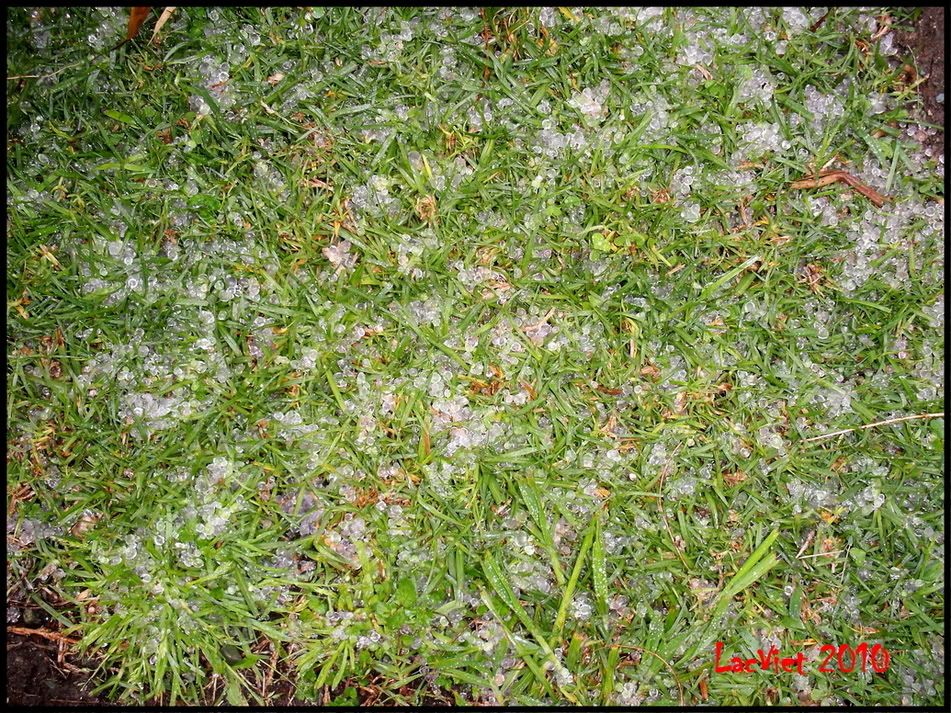
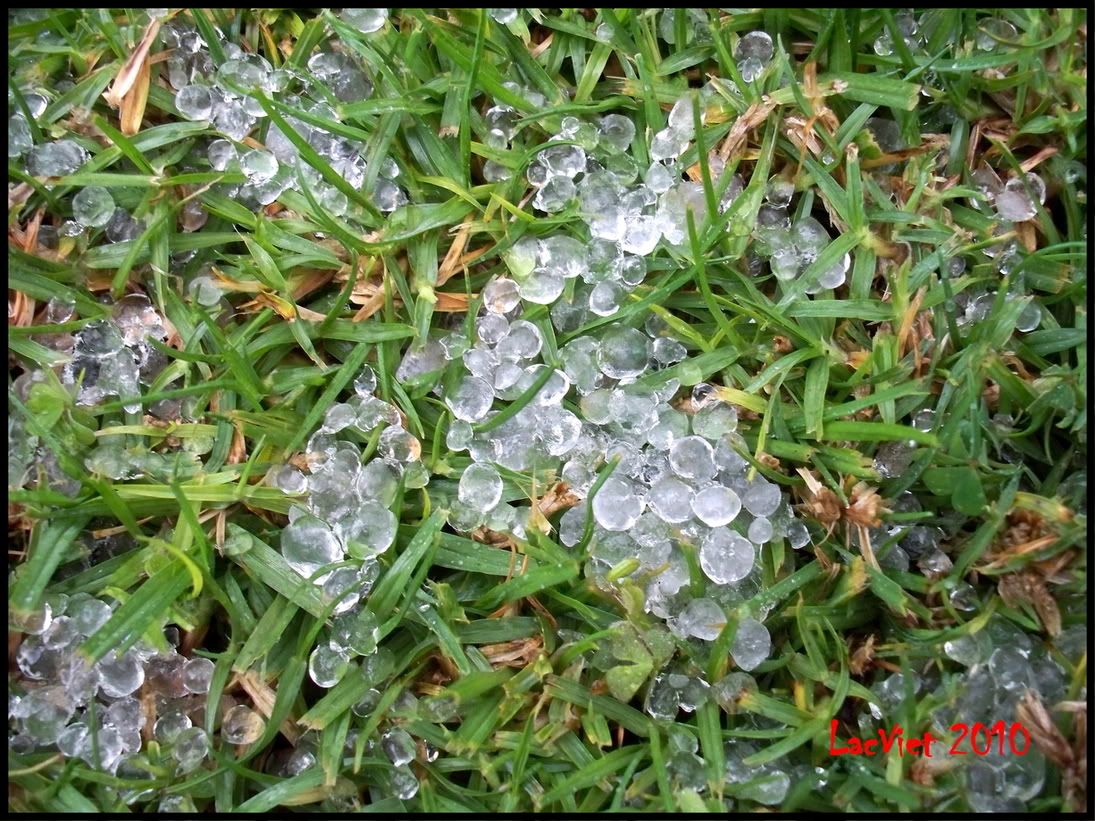
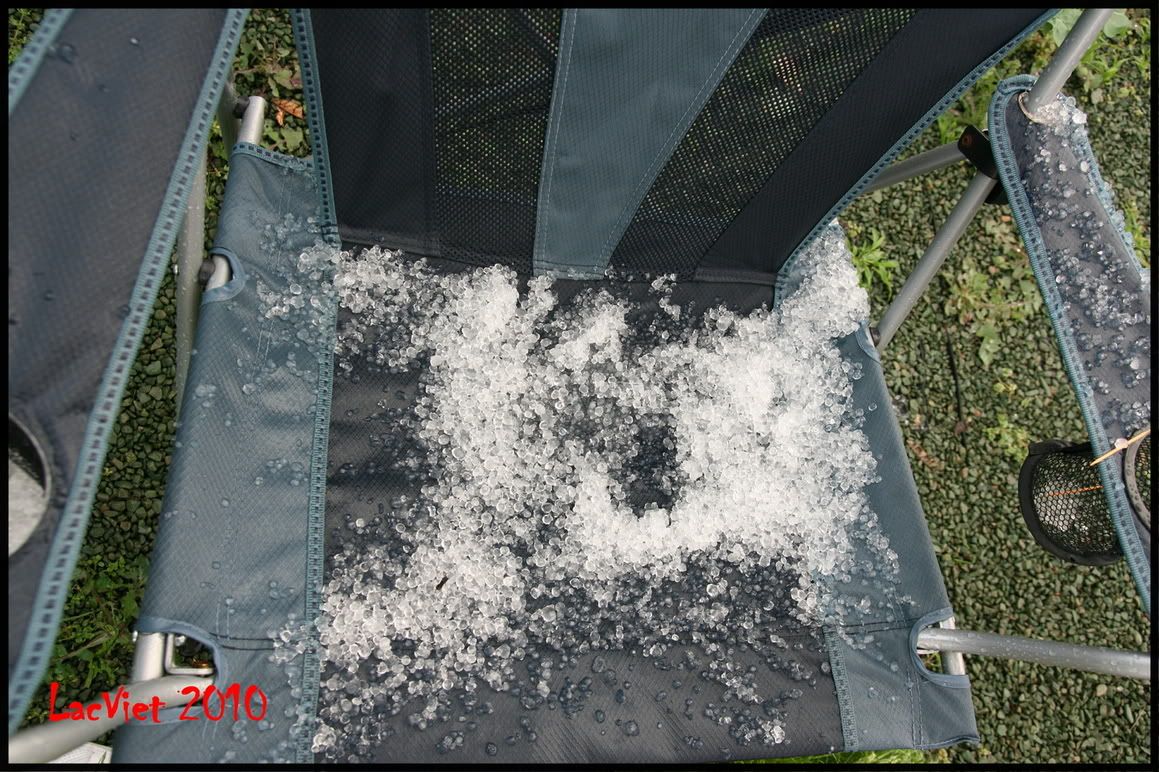
What a crazy day today: Windy, Rainy, Hail, and Rainbow!
The weather here lately is not co-operate with breeding white-rumped shama project. This year is one of the most rain fall in a very long time. There are also lots of strong wind blowing this rainy season. Today we have strong wind up to 25mph early in the morning, rain with showers/thunderstorms almost whole day, and HAIL! We haven't see hail for a very long time, probably at least 10 years since the last one. So far the first introduced pair is fine but no sign of breeding yet (building nest, lay eggs). The second introduced pair (H32N1 and H5N1) is staying together with no chasing around from the male. Again, still no sign of breeding yet. As for the pair that I really want to breed (H4N1 and H1N1), the male is ready to breed but the female seems not. She is too scare of him everytime he flies near her. I can see that he did not try to fight, bite, or doing in aggressive nature but she is still very nervous and would fly all over the aviary trying to hide from him. I'll try to introduce this pair again in another week or when the temperature is warmer with lots of sunshine.
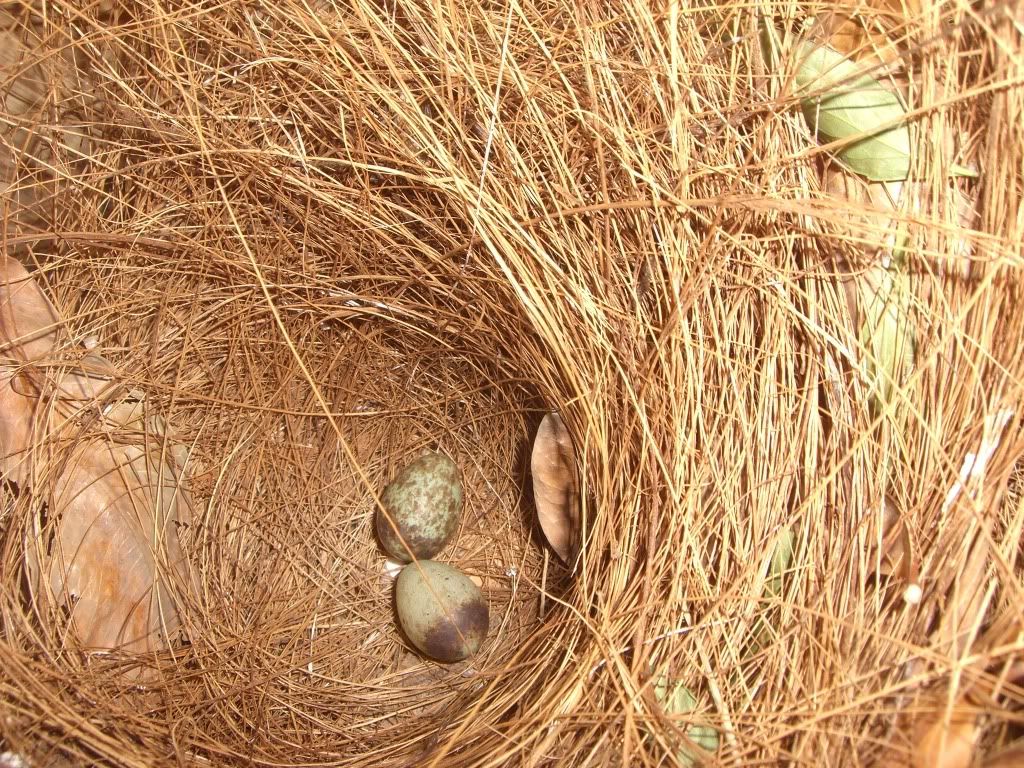
First Eggs of the 2010 Season from my friend OrangeHorn
Looks like my friend Tung Tran is one of the first few person on this side of the world has white-rumped shama eggs in this 2010 season :) Congrats my friend!
First egg laid on 02/25/2010 which is very early in the season and is the result of careful planning and careful control of temperature, daylight, and diets.
You can view his blog at: http://tungthtran.blogspot.com/
First egg laid on 02/25/2010 which is very early in the season and is the result of careful planning and careful control of temperature, daylight, and diets.
You can view his blog at: http://tungthtran.blogspot.com/
Update on 03/10/2010: One egg lost few days after laid. One egg hatch after 11 days of incubation:
Monday, February 22, 2010
Winter time and available of live food source
Winter time is a time that live food is scarce and hard to find one in large quantity. It is always hit hard for hobbyists who keep insect eating animals such as lizards and insectivore bird right about after mid-winter passed, near spring time. This is the time that most feeder insect (such as crickets, mealworms, waxworms,etc.) farm did not have enough supply to sell. One of the reason is because of insect in generals need great deal amount of warm to be able to grow and breed, and winter time cause them to slow growth and slow down the breeding cycle. Another reason is that winter is also a time of rain, and with the low temperature and high humidity combined, this combination can cause disease in insect's colony and kill them off in large quantity. Winter storm in certain area can hinder the shipping of those crickets across country. Since the farms produce less quantity of feeder insect they either they raise the price up which none of the farms want to do, keep the same price but sell less quantity than what suppose to be (which they usually do), or they sell in very limited quantity per customer. Some farm might have to shut down for few weeks because they didn't have enough to sell. In addition, the farm also charges higher shipping cost due to they have to add head pack to keep the crickets alive or we must pay premium shipping cost (usual 2 day guarantee delivery) so that the crickets can be sure still alive when arrived at our home. This is happens to few of us last week as the farm we usual buy did not have any crickets to sell due to some kind of disease cause most of the farm's cricket to die. Because we usually buy enough supply for two week at a time, so most of us did not have crickets to feed our birds for two weeks. Luckily, I have back up source to buy crickets with reasonable price, mealworms as addition live food source, and still have few thousands of B. lateralis in the garage so I have no issue. With about a dozen of insect eating birds, few days of no live food is ok, but few weeks of no live food is devastating to the birds. Because the demand of live insects is so large in the U.S and there are several of insect farms across the country, there is rarely a time that we as a hobbyist could not buy those insects such as cricket in this hard winter time but we might have to pay more than usual due to shipping cost of extra heat pack. So having back up source of live food to buy, feed the bird additional live food source, and/or raising few of the live food source yourself can guarantee that the birds have constant supply of live food to eat and more importantly, no extra money to spend! :)
Subscribe to:
Comments (Atom)